
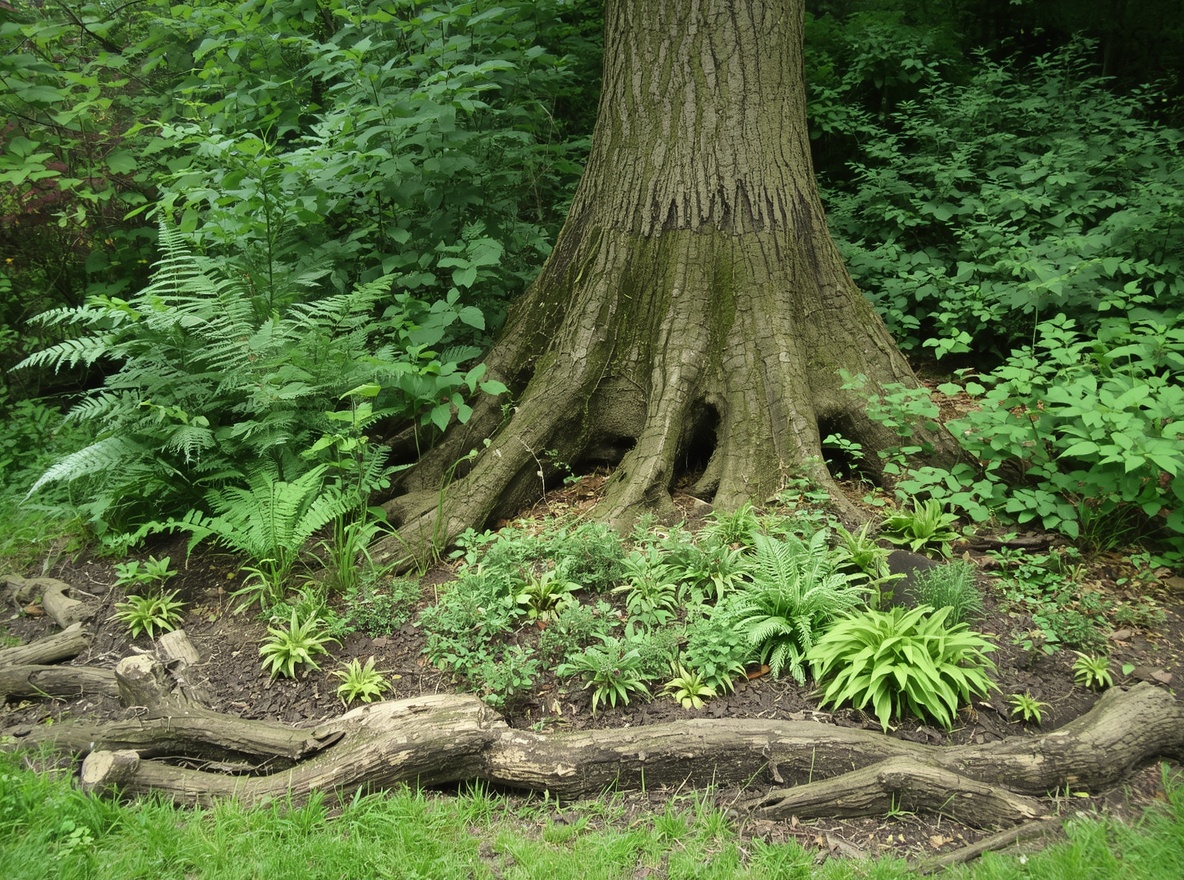
Every yard seems to have one spot where nothing really wants to cooperate.
It might be under a big tree, along the north side of the house or tucked behind a fence where the sun barely reaches. These darker corners are usually the places people ignore because they assume nothing interesting will grow there.
But shade gardens can be some of the prettiest parts of a yard. You get softer greens, more texture, less glare and plants that feel a little moodier and more layered than a typical sunny flower bed.
The trick is choosing plants and materials that actually like those conditions instead of trying to force sun-loving flowers into a place where they are never going to be happy.
Here are 20 shade garden ideas that can turn the darkest corner of your yard into one of the best parts of it.
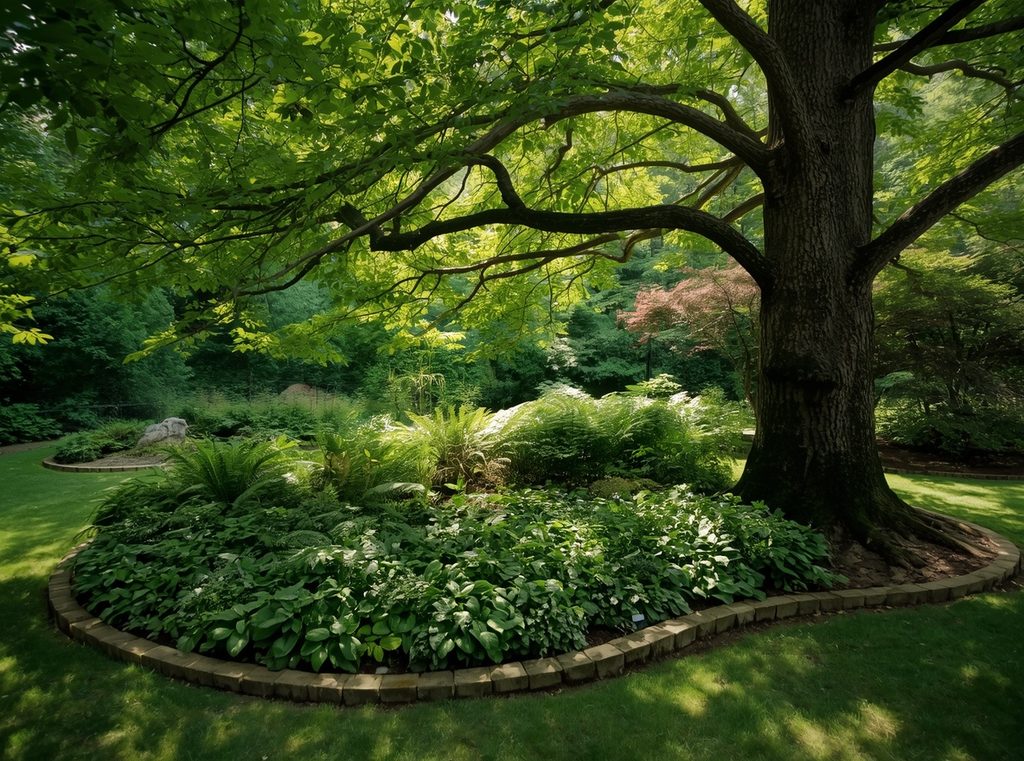
1. Start with hostas
Hostas are popular in shade gardens for a reason. They are easy, dependable and available in a huge range of sizes and leaf colours, from deep blue-green to bright chartreuse and creamy variegated varieties.
The leaves are the real attraction, so you do not have to rely on flowers to make the garden look interesting. Mixing a few different hosta shapes and colours can give you plenty of contrast even in a very dark bed.
2. Add ferns for texture
Ferns immediately make a shady space feel softer and more established. Their fine, feathery foliage works especially well beside broad-leaved plants like hostas and heuchera.
Choose varieties suited to your climate and moisture levels. Some ferns like consistently damp soil, while others are surprisingly tolerant once established.
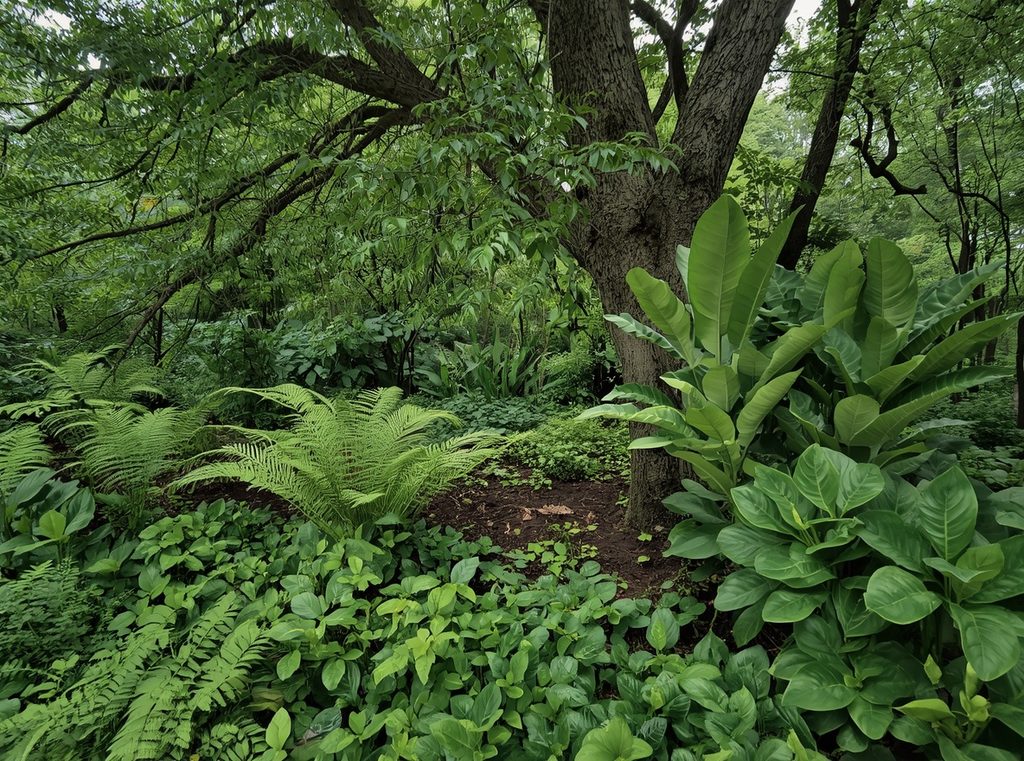
3. Use heuchera for colour
If you want more colour without depending entirely on flowers, heuchera is a great option. The foliage comes in shades of burgundy, caramel, lime green, silver and nearly black, which makes it easy to add contrast to a mostly green shade garden.
They also stay fairly compact, so they are useful near the front of beds or tucked between larger plants.
4. Plant astilbe for soft flowers
Astilbe produces fluffy, feathery flowers in pink, white, red and lavender, and it looks especially good in groups. It prefers soil that stays reasonably moist, so it can be a great fit for lower or damper areas of the yard.
The flowers add a little height without making the garden feel too formal, and the fern-like foliage still looks good even when the blooms are finished.
5. Use Japanese forest grass
Japanese forest grass is one of the nicest ways to add movement to a shady garden. The blades arch gently and create a soft, flowing shape that looks completely different from broad-leaved shade plants.
Golden and variegated varieties can also brighten darker corners without needing actual flowers.
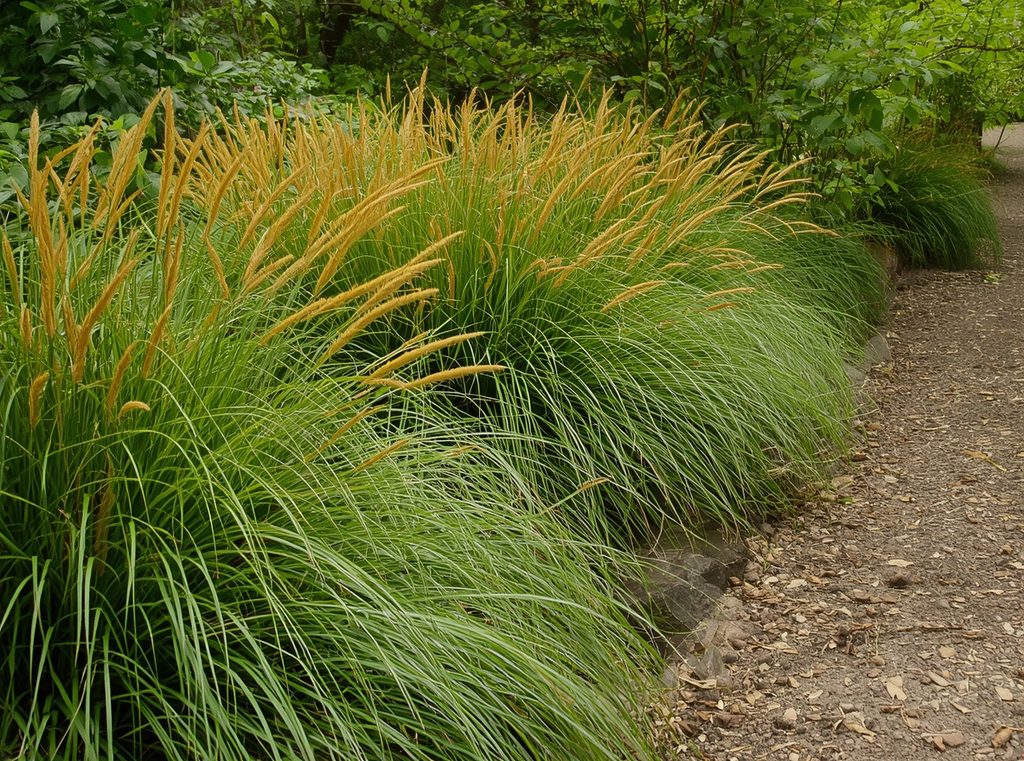
6. Add a gravel or stone path
A dark garden can start to feel muddy or undefined if there is nothing breaking up the planting. A simple gravel path or a few stepping stones gives the space structure and makes it feel intentional.
Stone also works especially well in shade because moss and weathering tend to make it look better over time rather than worse.
7. Let moss stay where it wants to grow
If moss keeps showing up in a shady damp corner, you do not necessarily need to fight it.
Moss can create a beautiful soft ground layer around stones, tree roots and paths. It gives the area an almost woodland feel and requires very little from you once it is established.
Sometimes the easiest garden solution is working with what is already happy there.
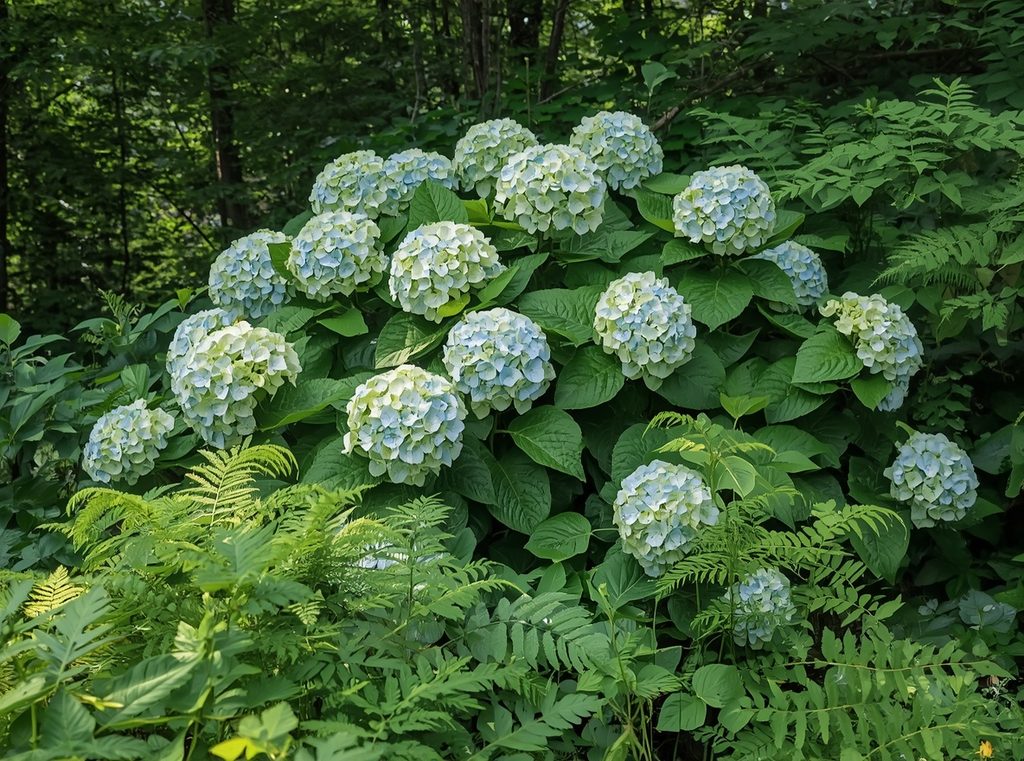
8. Use hydrangeas for bigger impact
Many hydrangeas tolerate partial shade beautifully, especially spots with morning sun and protection from hot afternoon light.
They are useful when you need something larger because one mature shrub can fill a lot of space and provide structure behind smaller shade plants.
Check the specific variety before planting, since light and pruning needs can vary quite a bit.
9. Plant bleeding hearts
Bleeding hearts are one of those plants that look almost too delicate to be easy, but they are surprisingly dependable in the right conditions.
They bloom in spring with small heart-shaped flowers hanging from arching stems and work beautifully in woodland-style beds.
The foliage may die back later in the season, so plant them near something that can fill the space once they disappear.
10. Add hellebores for early flowers
Hellebores are especially useful because they bloom very early, sometimes when the rest of the garden is still barely waking up.
They tolerate shade, have attractive evergreen or semi-evergreen foliage in many climates and come in soft shades of white, pink, green and deep plum.
Once established, they tend to be very low maintenance.
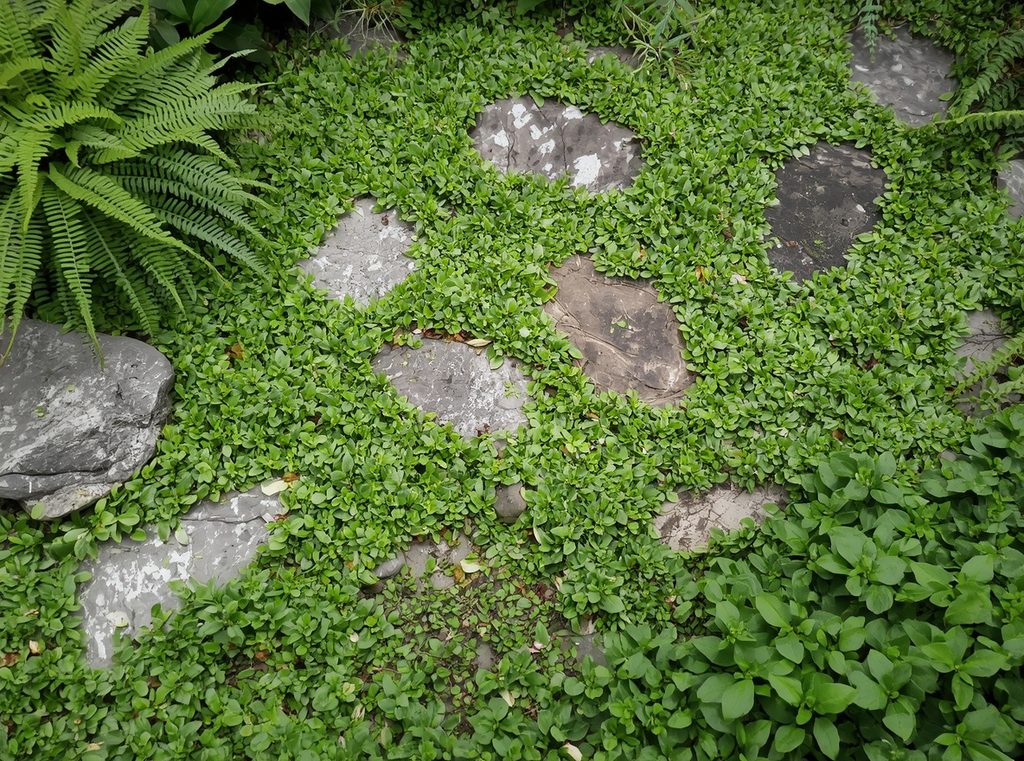
11. Use groundcovers instead of mulch everywhere
Low-growing shade plants can eventually fill the gaps between larger plants and make a bed look much more lush.
Sweet woodruff, wild ginger, lamium and other shade-tolerant groundcovers can all work depending on your climate. Just check how aggressively they spread before planting because some are much more enthusiastic than others.
12. Add tree stumps or logs
A shade garden is one of the few places where an old stump or fallen log can look completely intentional.
Use them as small stands for pots, natural edging or simply leave them as part of the landscape. Weathered wood adds texture and helps the whole space feel more connected to the trees around it.
It is especially effective if you are going for a woodland garden rather than a polished formal bed.
13. Use pale flowers to brighten dark areas
White and pale flowers stand out beautifully in shade because they reflect what little light is available.
White impatiens, pale astilbe, hydrangeas and light-coloured begonias can make a dark corner feel brighter without changing the actual light conditions.
Even a small amount of white repeated throughout the bed can have a big effect.
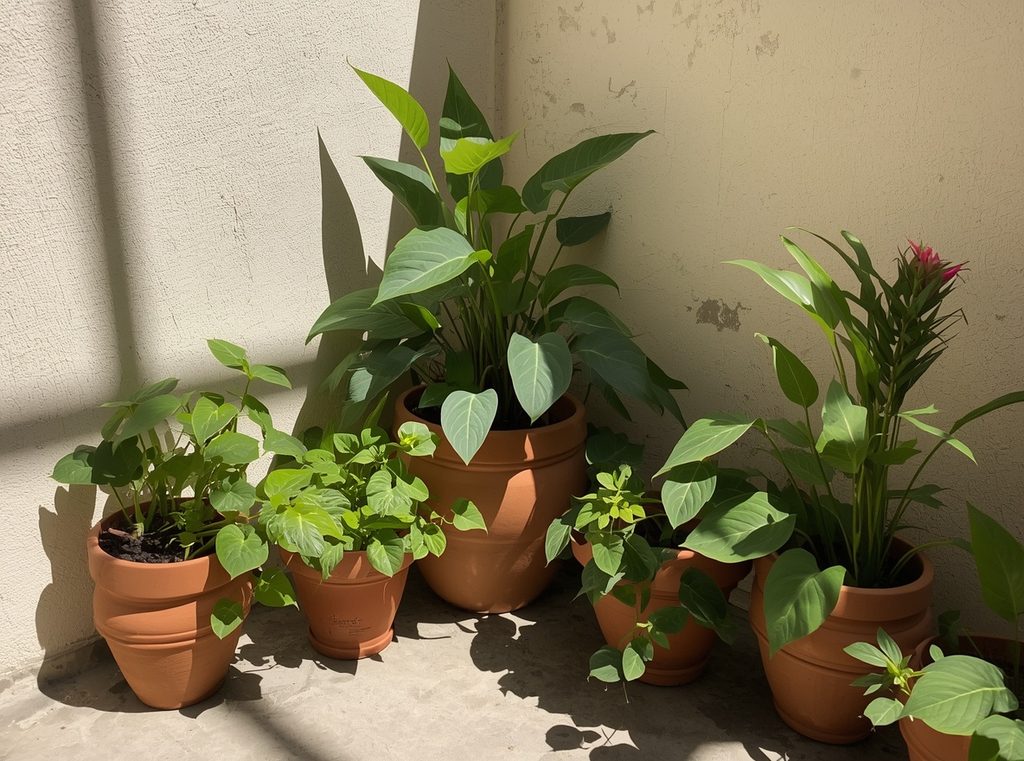
14. Grow begonias in containers
Begonias are a great option for patios, porches or garden corners that get very little direct sun. They bloom for a long time and come in everything from simple white flowers to deep reds and pinks.
Using them in pots also gives you some flexibility. You can move the containers around if the light changes through the season or bring them somewhere protected if needed.
15. Add a bench
Shade is exactly where you want a place to sit in the middle of summer.
A simple wooden or metal bench tucked under a tree can turn a forgotten corner into somewhere you actually use. Surround it with plants rather than setting it in the middle of open ground so it feels like part of the garden.
You do not need a full seating area. One bench can be enough.
16. Use bark and dark mulch
Fresh mulch can make a shade bed look much more finished while also helping the soil hold moisture and reducing weeds.
Dark bark mulch works especially well because it creates contrast against bright green foliage and makes lighter plants stand out.
It also gives new plantings a more established look while you wait for them to fill in.
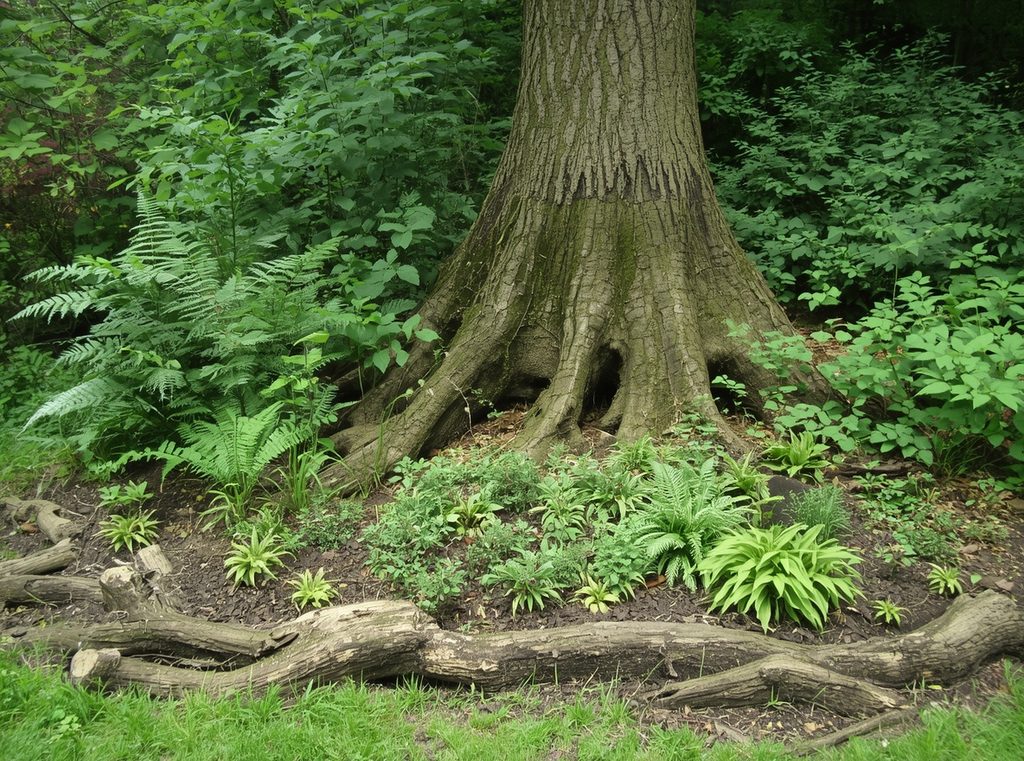
17. Plant around tree roots carefully
Planting under mature trees can be tricky because you are dealing with both shade and root competition.
Avoid digging deeply or piling large amounts of new soil over exposed roots. Instead, work with the spaces between roots and choose smaller plants that can establish without major digging.
Sometimes a few carefully placed plants and a natural mulch layer are better than trying to completely fill the area.
18. Add a birdbath
A simple birdbath fits naturally into a shade garden and gives the space a focal point without adding more plants.
Place it somewhere you can see from a window or seating area and surround it with lower foliage so birds still have a clear place to land.
Stone or concrete versions tend to look especially good once they begin to weather.
19. Use lighting sparingly
Shade gardens already have a quieter mood, so they do not need a row of bright lights running through them.
A few low solar lanterns or subtle path lights are usually enough to make the space usable in the evening without losing that softer feeling.
Warm light works much better here than cool white light.
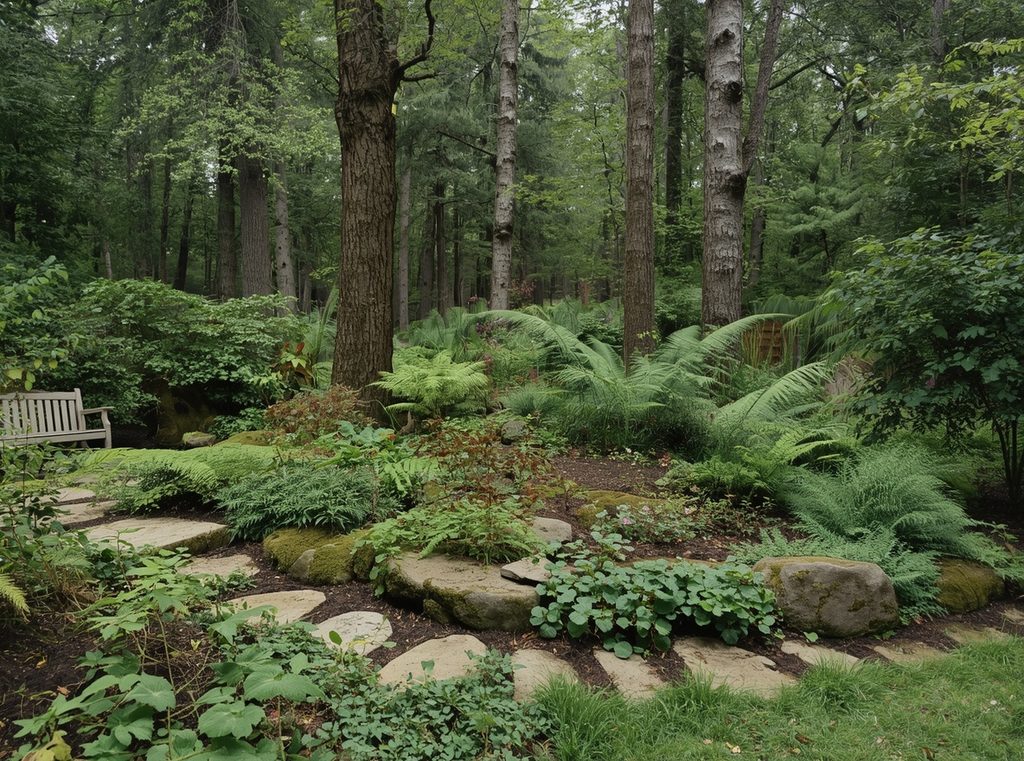
20. Lean into the woodland look
If the darkest part of your yard is already under mature trees, it may be easier to embrace that instead of trying to make it look like a sunny flower garden.
Use ferns, hostas, moss, shade-tolerant groundcovers, natural stone and a few flowering plants suited to lower light. Let fallen leaves remain in some areas and keep the edges a little softer.
The result can feel much more intentional than constantly trying to brighten a space that naturally wants to be quiet and green.
A simple shade garden formula
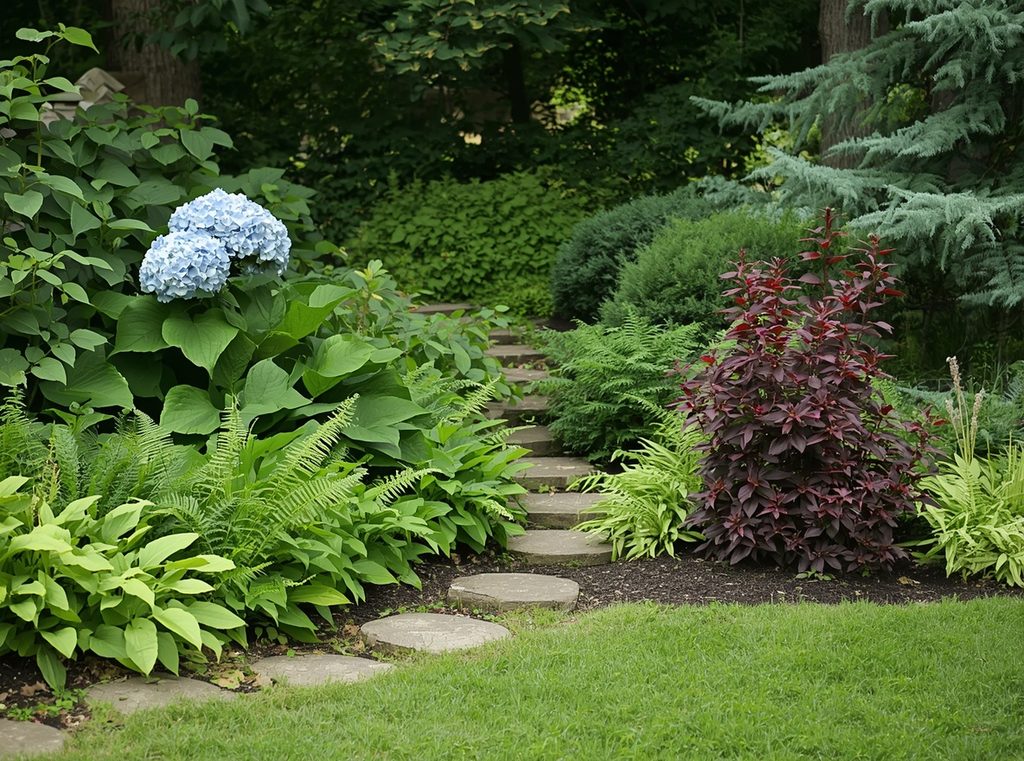
If you are starting with an empty shady bed, keep the plant list fairly short. Choose one larger shrub or structural plant, two or three types of hostas or ferns, one plant with colourful foliage such as heuchera and one flowering plant like astilbe or hellebore.
Repeat those plants rather than using one of everything. Add mulch or a shade-tolerant groundcover between them and use a few stones, a path or a bench to give the space some structure.
That combination gives you different heights, leaf shapes, colour and seasonal flowers without creating a garden that needs constant attention.
Stop trying to make shade behave like sun
The darkest part of your yard does not need to be fixed. It just needs different plants.
Once you stop trying to grow sun-loving flowers there, shade becomes much easier to work with. You can focus on foliage, texture, soft colour and plants that genuinely prefer cooler conditions.
And honestly, on a hot summer afternoon, that quiet green corner might end up being the nicest part of the entire yard.