
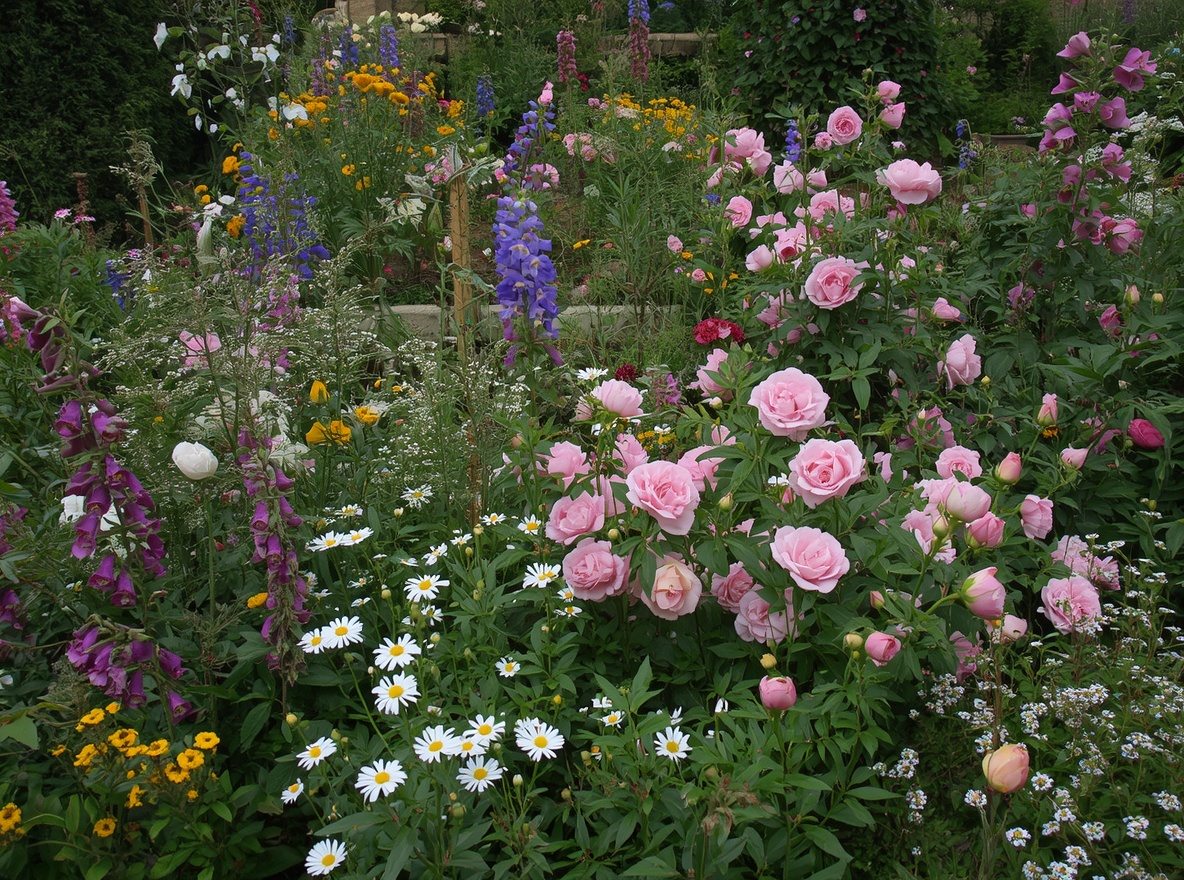
A cottage garden is supposed to look a little unruly.
Not neglected, exactly. More like the plants were given permission to spill over the path, lean into each other and grow into something softer than a perfectly edged flower bed.
That is what makes the style so appealing. Cottage gardens feel full without feeling formal, colourful without looking overly planned and romantic without needing to be precious about it.
The trick is that the softness is still intentional. There is usually a structure underneath all that overgrowth, even if you cannot immediately see it.
If you love gardens that look layered, lush and slightly wild, here are some of the easiest ways to create that cottage garden feel on purpose.
Start with a loose layout
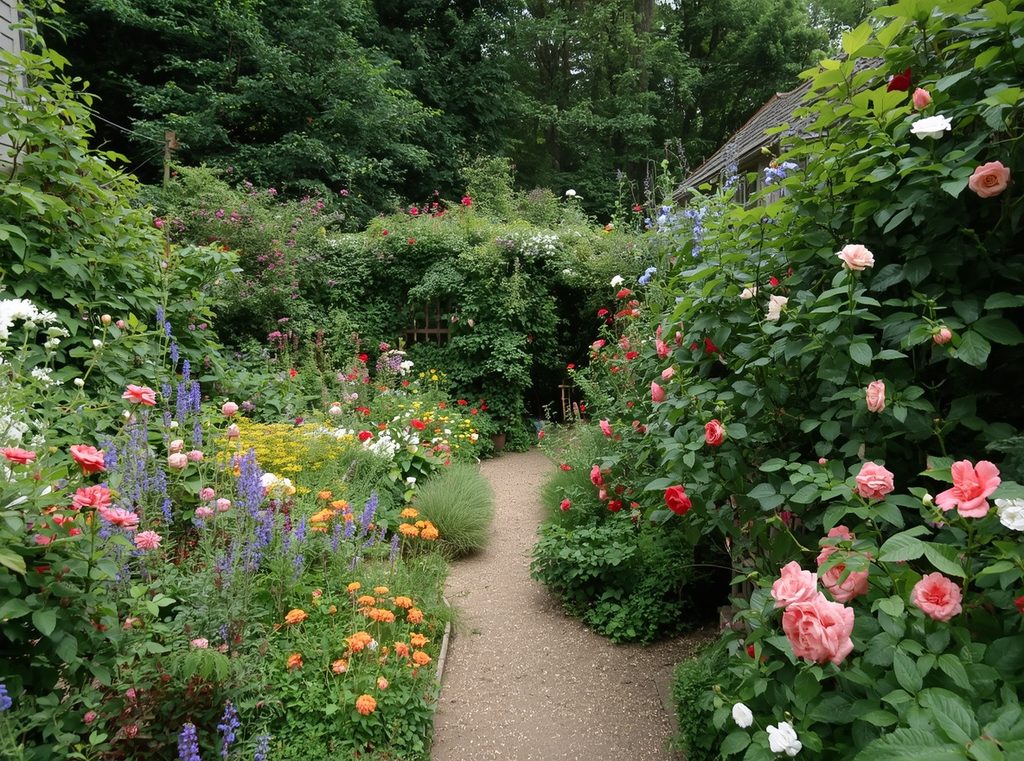
Cottage gardens do not need strict symmetry, but they still benefit from a basic shape. A curved path, a gate, a bench or even one central tree can give the space enough structure that the planting around it can feel more relaxed.
Without any kind of anchor, a full garden can start to look random. With one or two strong features in place, the softer planting feels much more intentional.
Plant in layers
One of the biggest differences between a cottage garden and a simple flower bed is the number of heights happening at once.
Use taller plants toward the back or centre, medium-height flowers through the middle and lower plants near paths and edges. Then let a few things break those rules so the whole bed does not look too arranged.
That layered effect is what gives cottage gardens their full, overflowing look.
Repeat plants instead of using one of everything
It is easy to get carried away at the garden centre and come home with twelve completely different plants. Cottage gardens can handle variety, but repetition is what keeps all that variety from looking chaotic.
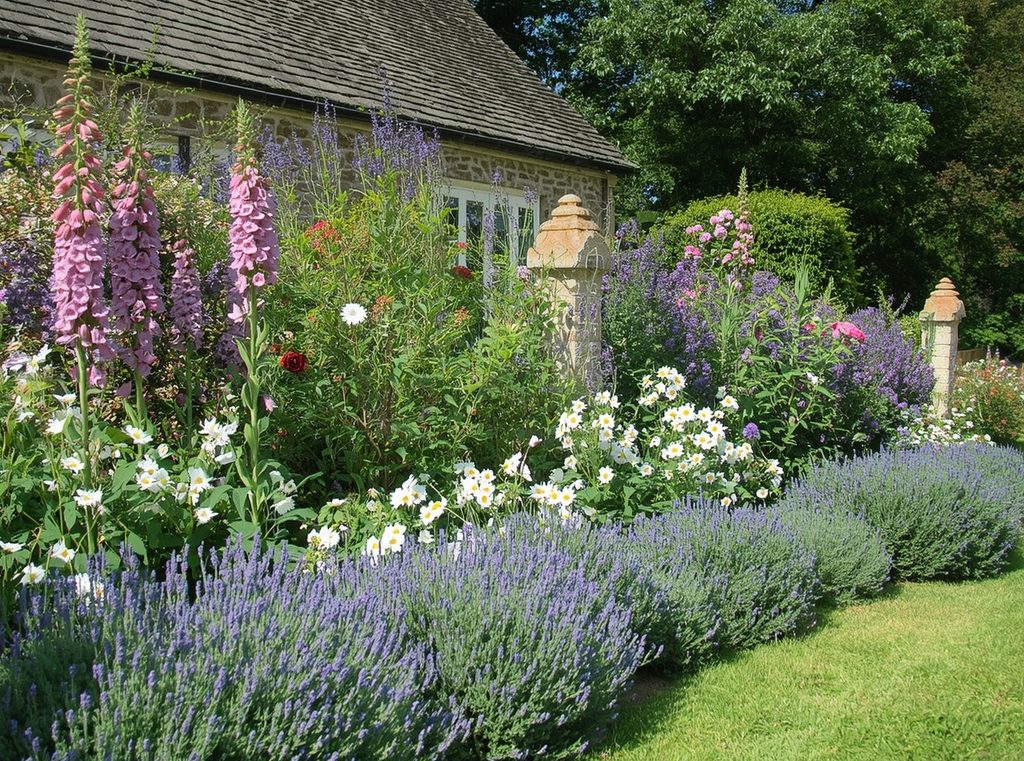
Choose a few favourite flowers and repeat them throughout the garden. The repeated colours and shapes tie everything together, even when the planting itself feels loose.
Let plants spill over the edges
Perfectly trimmed borders will immediately make a garden feel more formal.
For a softer look, let low-growing plants creep slightly over gravel, brick or stepping stones. Lavender, catmint, thyme and low sedums are all good for this depending on your climate.
You still want enough clear space to walk through comfortably, but a little spillover makes the whole garden feel established.
Use old-fashioned flowers
Cottage gardens naturally suit flowers that feel familiar and a little nostalgic. Roses, foxgloves, hollyhocks, delphiniums, daisies, peonies, lavender, cosmos and sweet peas all fit beautifully.
You do not need all of them. Choose the ones that actually suit your growing conditions and build from there.
Mix perennials with annuals
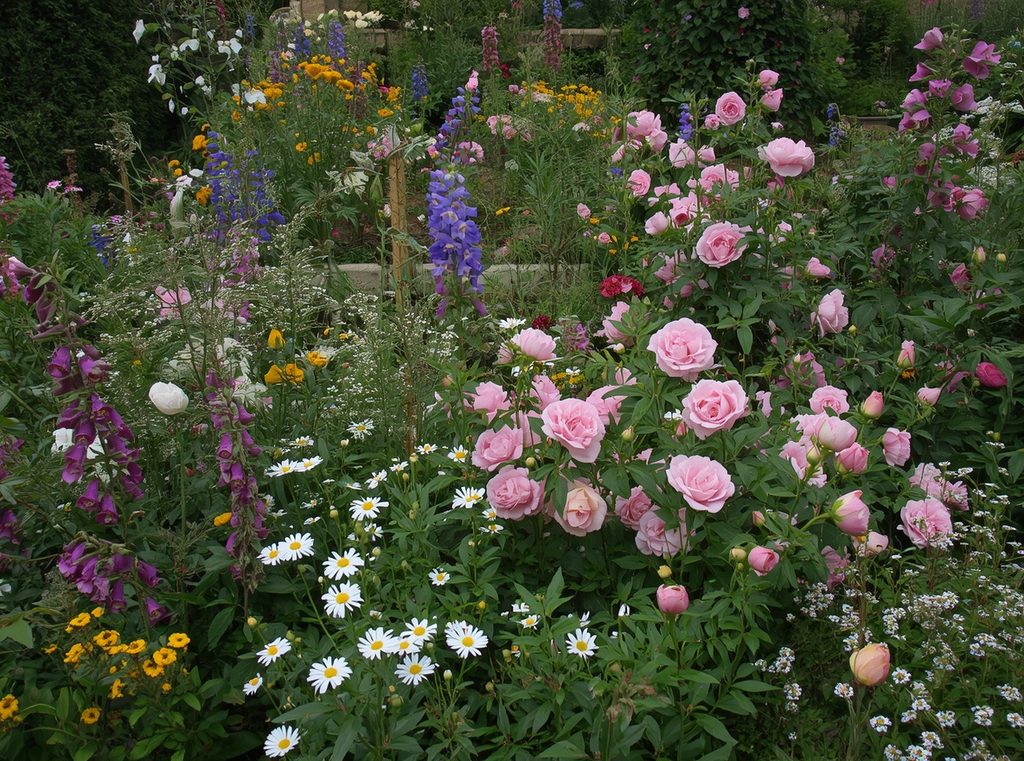
Perennials give the garden structure because they return every year, while annuals are useful for filling gaps and adding extra colour through the season.
A bed of established perennials with cosmos, zinnias, nasturtiums or sweet alyssum tucked between them can feel much fuller without requiring you to redesign the whole garden every spring.
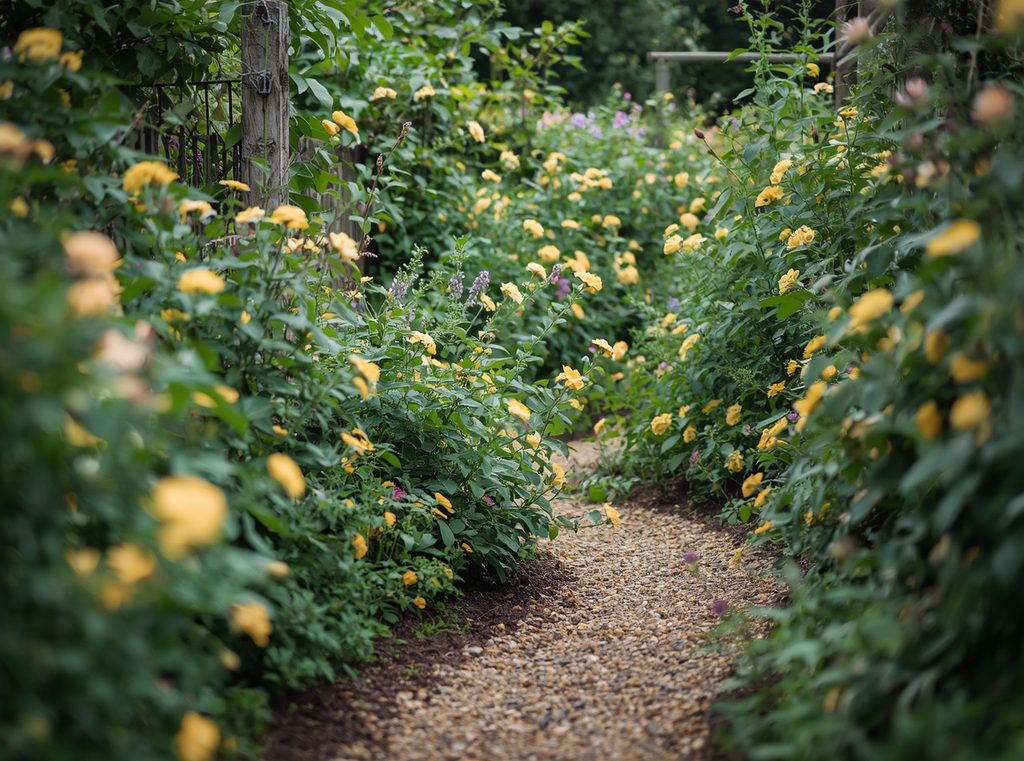
Add a gravel or stone path
A simple path immediately gives a full garden somewhere to organize itself around.
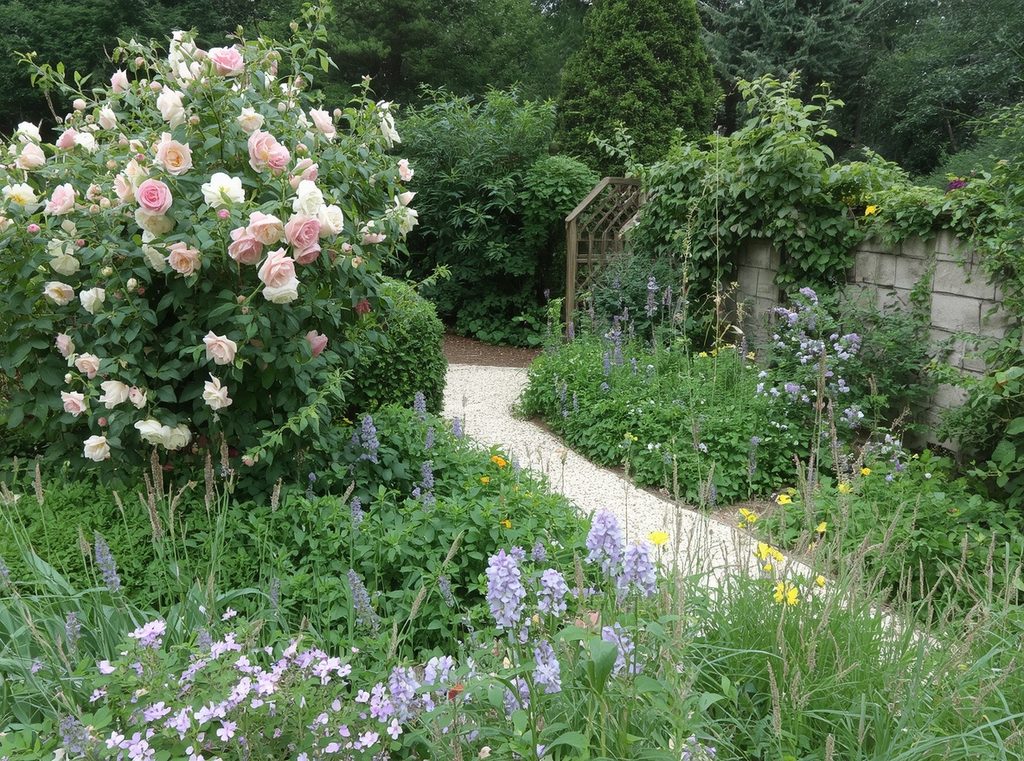
Gravel works especially well because it feels informal and allows plants to soften the edges naturally. Brick, old stone or irregular stepping stones can create a similar effect.
A slightly imperfect path usually fits the style better than something too polished.
Grow something vertically
Climbing plants make a cottage garden feel much more layered because the flowers are no longer only happening at ground level.
Use climbing roses, clematis, sweet peas or another vine suited to your climate on a trellis, fence, arbor or pergola.
Even a simple wooden trellis against a shed can become one of the prettiest parts of the garden once it is covered.
Mix herbs into the flower beds
Cottage gardens have always had a practical side, so herbs fit naturally into the style.
Rosemary, thyme, sage, chives and lavender can all sit comfortably beside flowering plants. They add texture, scent and something useful to pick while you are outside.
There is no rule saying vegetables, herbs and flowers all need separate sections.
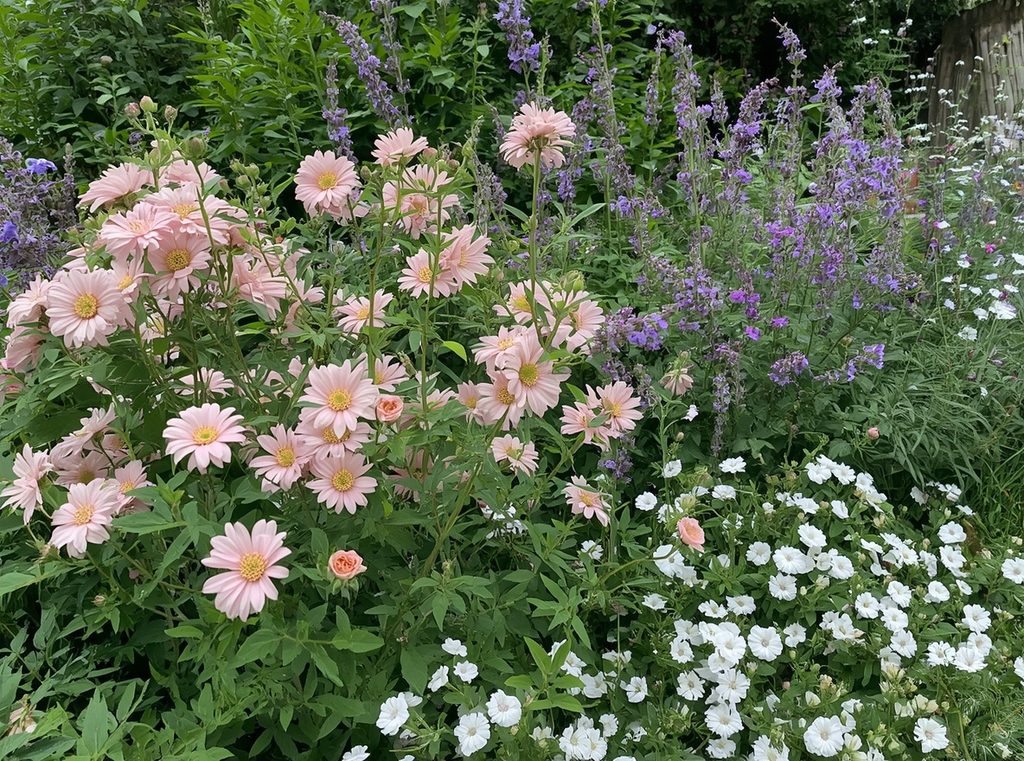
Keep the colour palette loose but connected
You can absolutely use colour in a cottage garden, but having a general palette helps keep the whole thing from becoming visually exhausting.
Soft pink, white, lavender and blue create a classic look. Yellow, apricot, rust and deep burgundy feel warmer. You can still add something unexpected here and there, but repeating a few main colours will make the garden feel cohesive.
Use shrubs to hold everything together
When all the flowers fade, shrubs keep the garden from disappearing.
Hydrangeas, roses, boxwood, lilacs and other flowering or evergreen shrubs can create the basic bones of the garden while softer plants fill the spaces around them.
This is especially useful if you want the garden to look intentional for more than just a few weeks in summer.
Do not cut everything back immediately
A cottage garden does not need to look freshly groomed all the time.
Let some seed heads dry naturally. Leave grasses standing into fall. Allow certain plants to flop a little instead of immediately staking or trimming them.
That softness is part of the look, and it can also make the garden more useful for birds and pollinators.
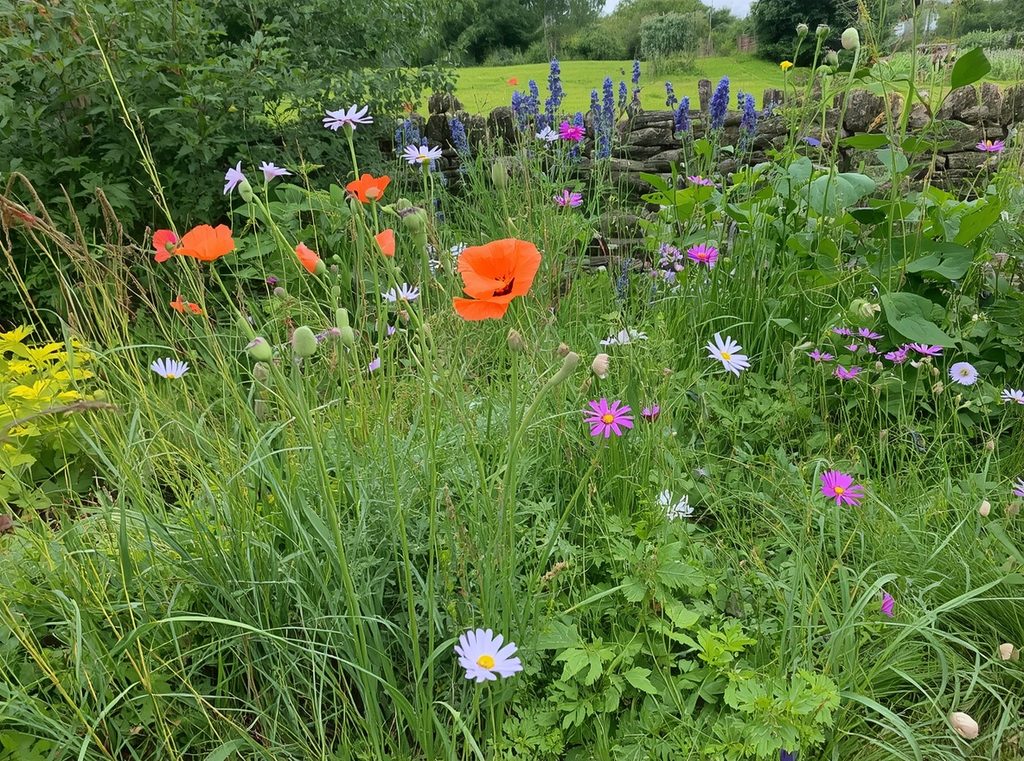
Let some flowers reseed themselves
Self-seeding plants are perfect for creating that slightly accidental cottage look.
Cosmos, calendula, foxgloves, poppies and nigella can all reseed in the right conditions. The following year, flowers may appear in places you did not exactly plan, which is part of the charm.
You can always move or thin seedlings if they show up somewhere inconvenient.
Add something weathered
Cottage gardens look better with a little age.
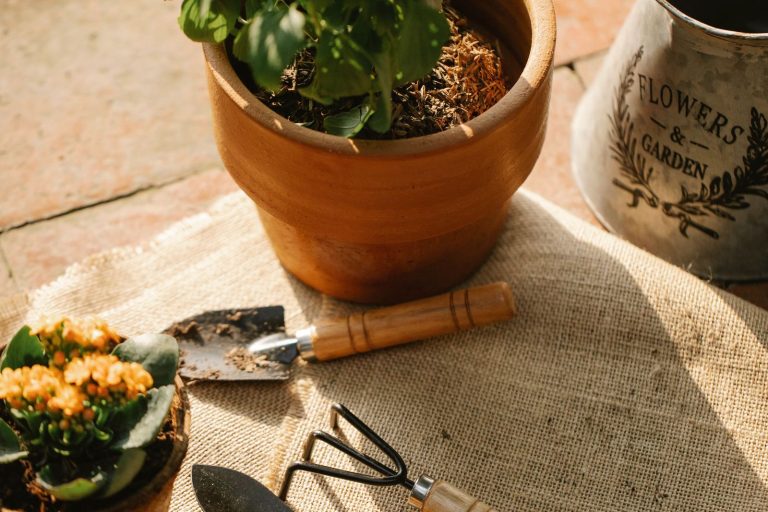
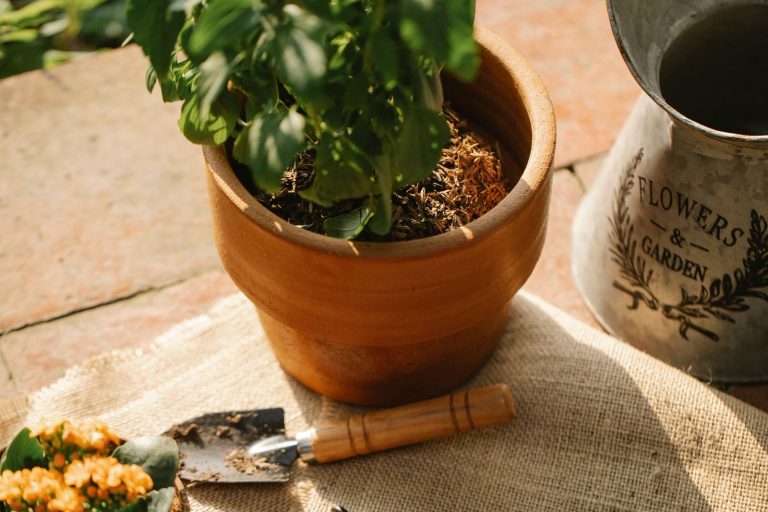
An old wooden bench, terracotta pots with some patina, a weathered gate, vintage watering can or slightly rusty metal trellis can make a new garden feel more settled.
You do not need to buy special “cottage garden decor.” One or two genuinely worn pieces are usually enough.
Use roses where you will actually see them
If you are going to grow roses, put them somewhere they can have a moment.
Along a fence, over an arbor, near a seating area or beside the entrance all make sense. A rose hidden at the back of the yard is still lovely, but one that you pass every day feels much more special.
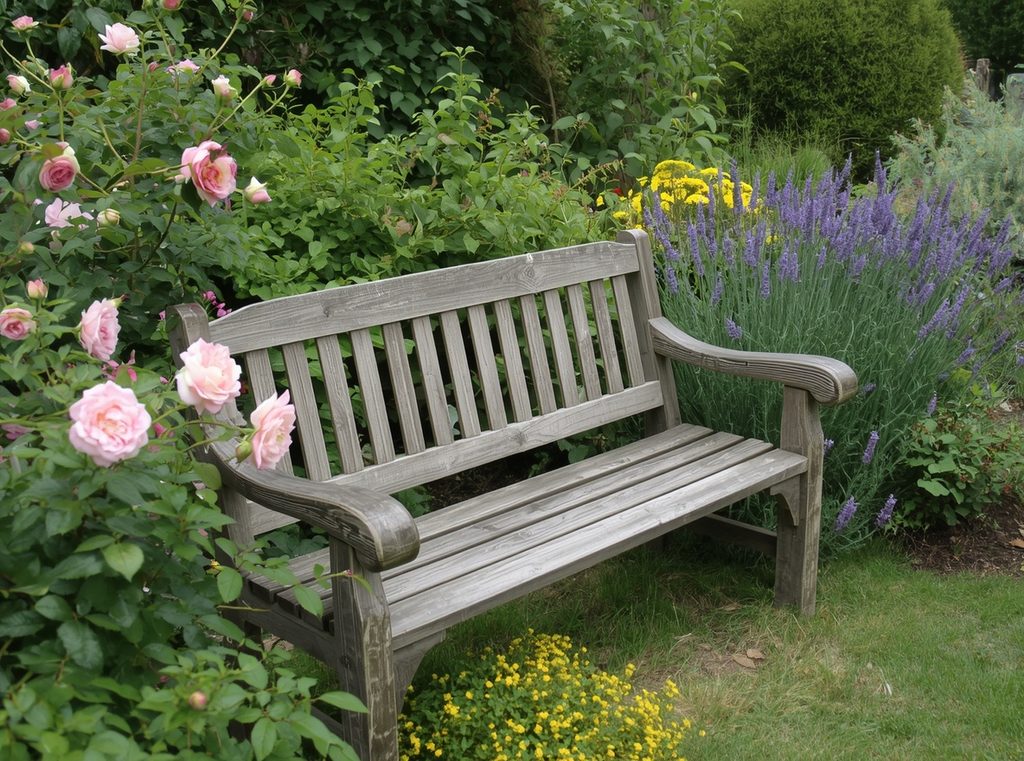
Create a place to sit
A cottage garden should feel like somewhere you can spend time, not just something you look at through a window.
A simple bench, café chair or small table tucked among the planting can make the space feel much more inviting.
It does not have to be a large seating area. Sometimes one chair in the right spot is enough.
Leave some room for imperfection
The easiest way to ruin the cottage garden look is to become too determined to make everything behave.
Some plants will lean. Some will reseed in strange places. Something will bloom much bigger than you expected and another plant will quietly disappear.
That is normal. The whole point is to create a garden that feels alive rather than perfectly controlled.
A simple cottage garden formula
If you are starting from scratch, choose one structural shrub, one climbing plant, three or four reliable perennials and one or two easy annuals that can fill the gaps.
Repeat those plants throughout the bed rather than buying one of everything. Add a gravel or stone path, mulch the open soil while the plants establish and let the edges soften naturally as everything grows in.
You will get the layered, slightly overgrown look without creating a garden that feels completely random.
Soft does not mean accidental
The prettiest cottage gardens look like they just happened, but there is usually some planning underneath them.
A path gives the garden shape. Repeated plants create rhythm. Shrubs add structure. Then the flowers are allowed to soften everything around them.
That balance is really the whole idea. Give the garden enough structure to hold together, then stop trying to control every inch of it.