
A garden can feel completely different after dark.
The plants become silhouettes, paths disappear, and suddenly the parts of the yard that felt finished during the day can look flat or oddly empty. Good outdoor lighting fixes that without turning the space into a stadium.
The best garden lighting is usually softer than people expect. A few warm lights placed at different heights can do more than a row of bright fixtures everywhere. You want enough light to see where you are going and enjoy the space, but still keep that quiet evening feeling.
Here are 22 outdoor lighting ideas that can make a garden feel warmer, more layered and much more inviting after the sun goes down.
1. Use warm path lights
Path lights are one of the easiest places to start because they add both safety and atmosphere. Instead of placing them in a perfectly even row, stagger them slightly so the path feels softer and less formal.
Warm white bulbs usually look much better in a garden than cool white. The goal is to gently light the ground, not make every stone visible from space.
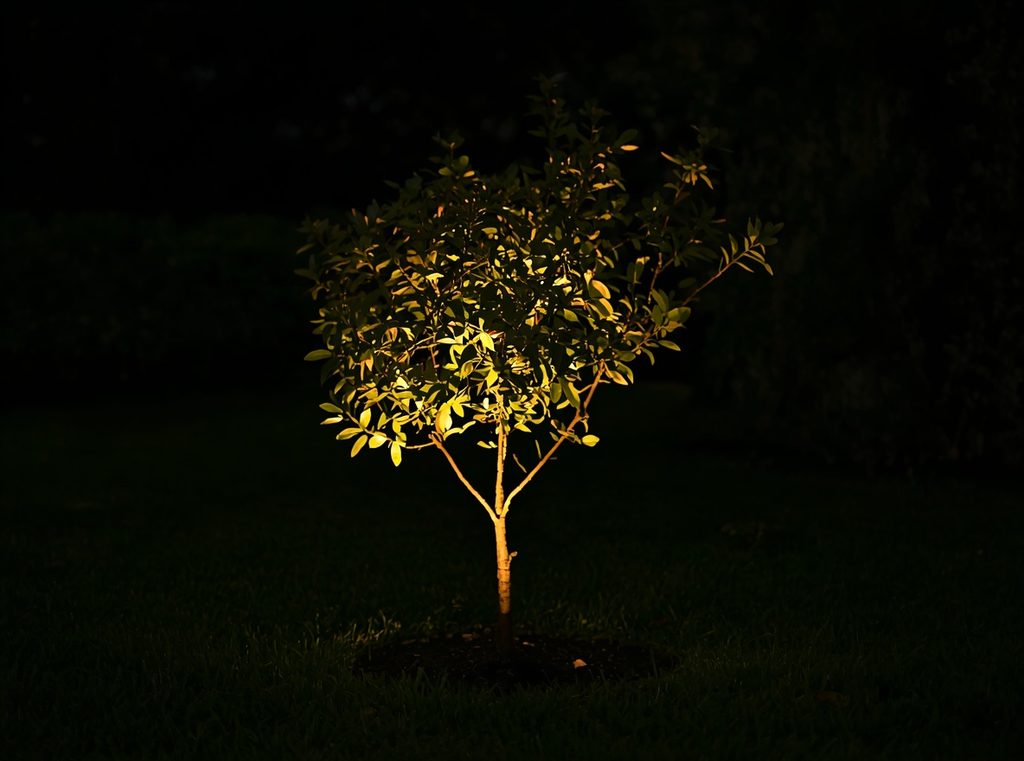
2. Uplight a small tree
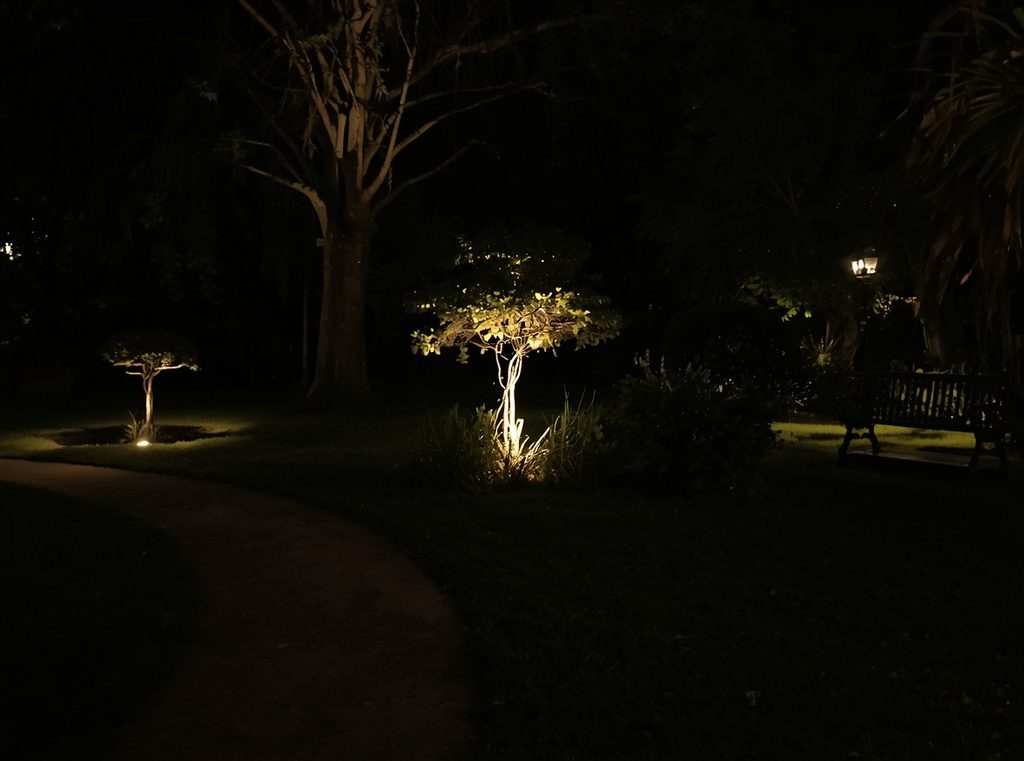
A single tree can become a beautiful focal point at night if you place a light at the base and aim it upward through the branches.
This works especially well with ornamental trees, multi-stem shrubs and trees with interesting bark. You only need one or two carefully placed fixtures to create a dramatic effect.
3. Hang string lights over the seating area
String lights are popular because they instantly make an outdoor seating area feel more intimate.
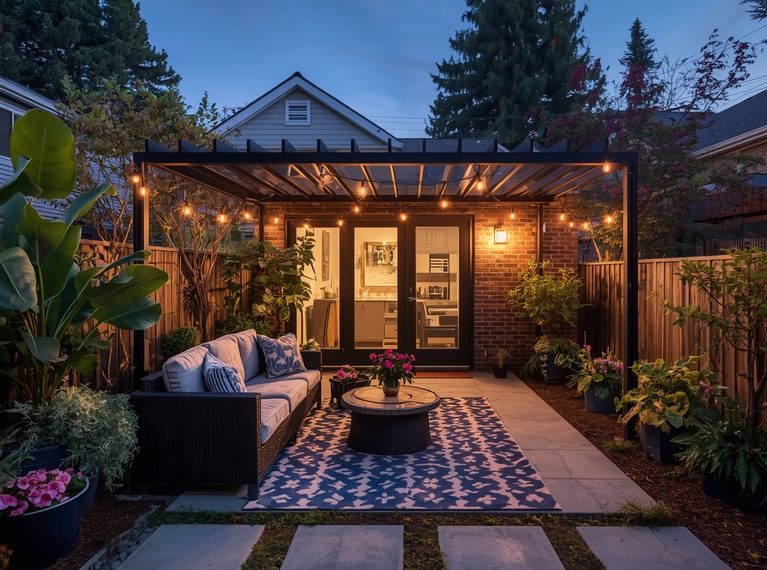
Hang them across a patio, between posts or beneath a pergola. Keep the lines fairly simple and avoid wrapping every available surface. A few clean strands usually look better than a giant web of lights.
4. Add lanterns beside outdoor furniture
Lanterns are perfect when you want lighting that feels more decorative and less permanent.
Place one or two beside a chair, bench or outdoor sofa. Larger lanterns usually have more impact than lots of tiny ones, and they can be moved around whenever the layout changes.
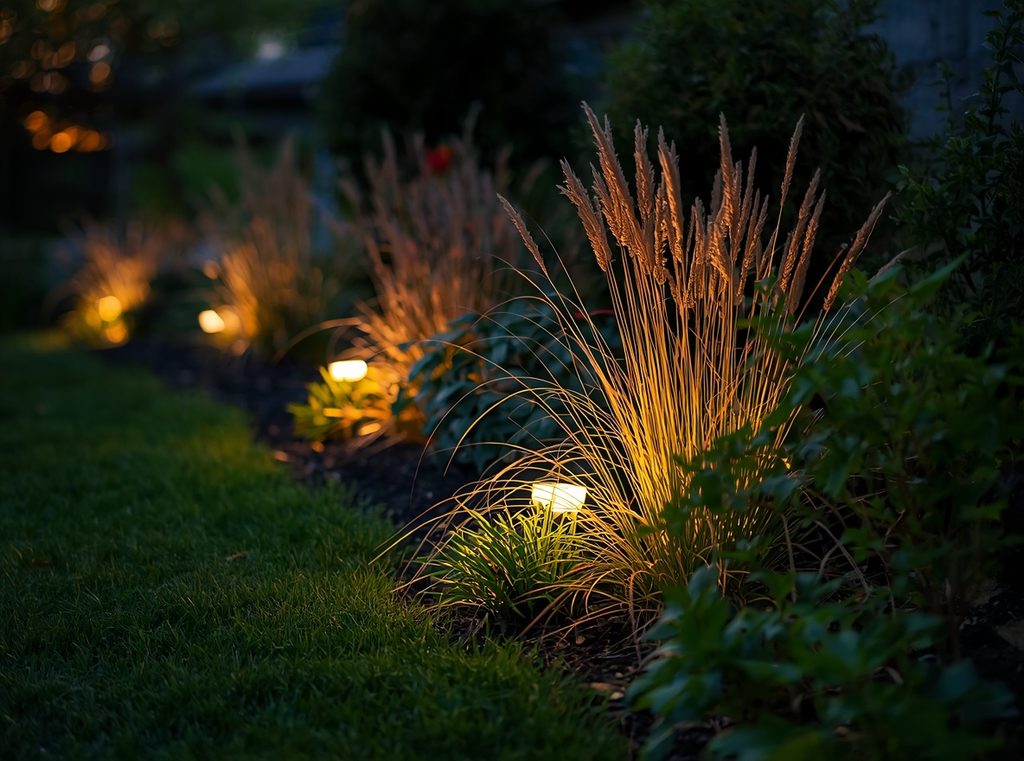
5. Light the edge of a garden bed
A low light placed near the edge of a flower bed can softly reveal the plants without lighting the whole yard.
This works especially well with grasses, ferns and other plants that have interesting shapes. The shadows become part of the effect, which makes the garden feel much more layered.
6. Use solar lights in small doses
Solar lights can be useful, especially if running wiring is not realistic, but less is usually more.
A few well-placed fixtures along a path or around a seating area will look much better than twenty tiny plastic stake lights scattered everywhere. Look for simple designs and warm-toned light if possible.
7. Highlight a stone wall
If you have a stone retaining wall, garden wall or textured brick surface, grazing light across it can make the texture much more visible at night.
Place the fixture close to the wall so the light skims across the surface rather than blasting it straight on. This creates much deeper shadows and a more natural look.
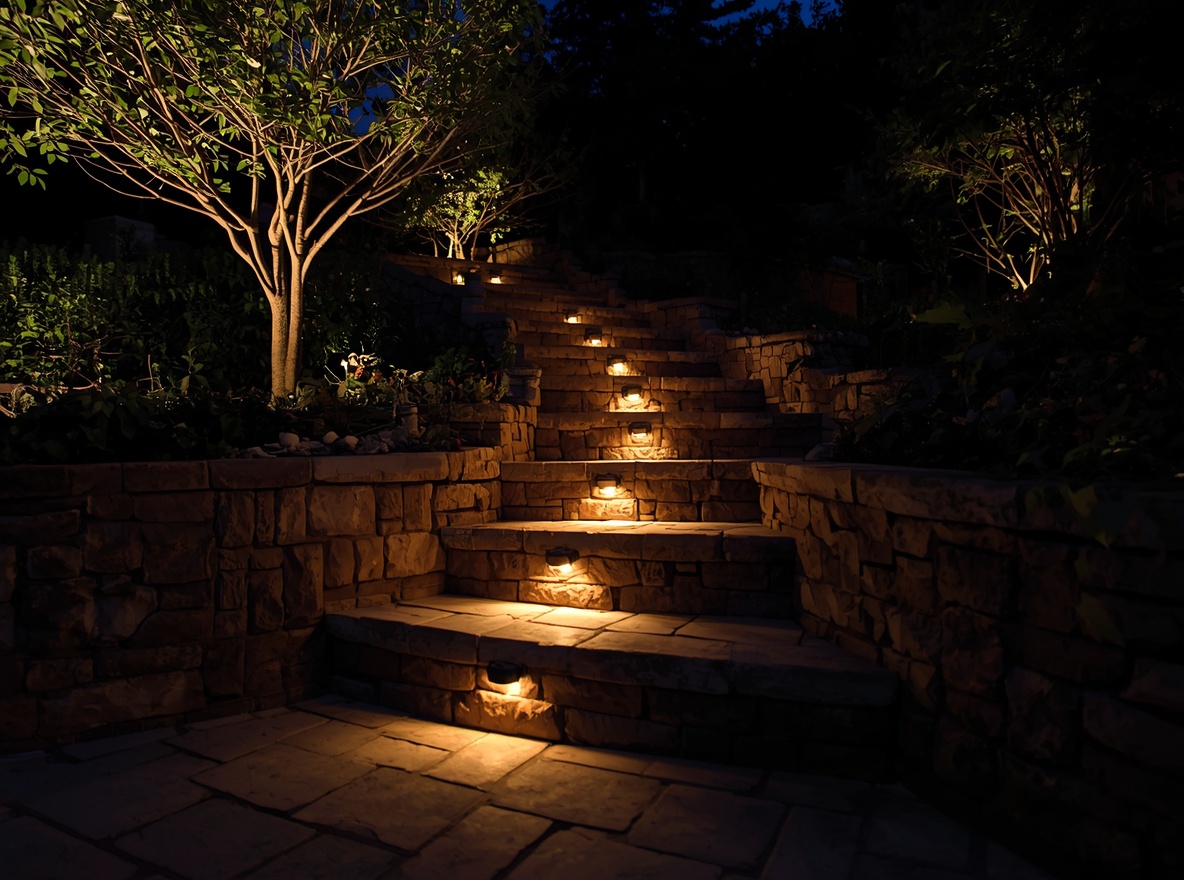
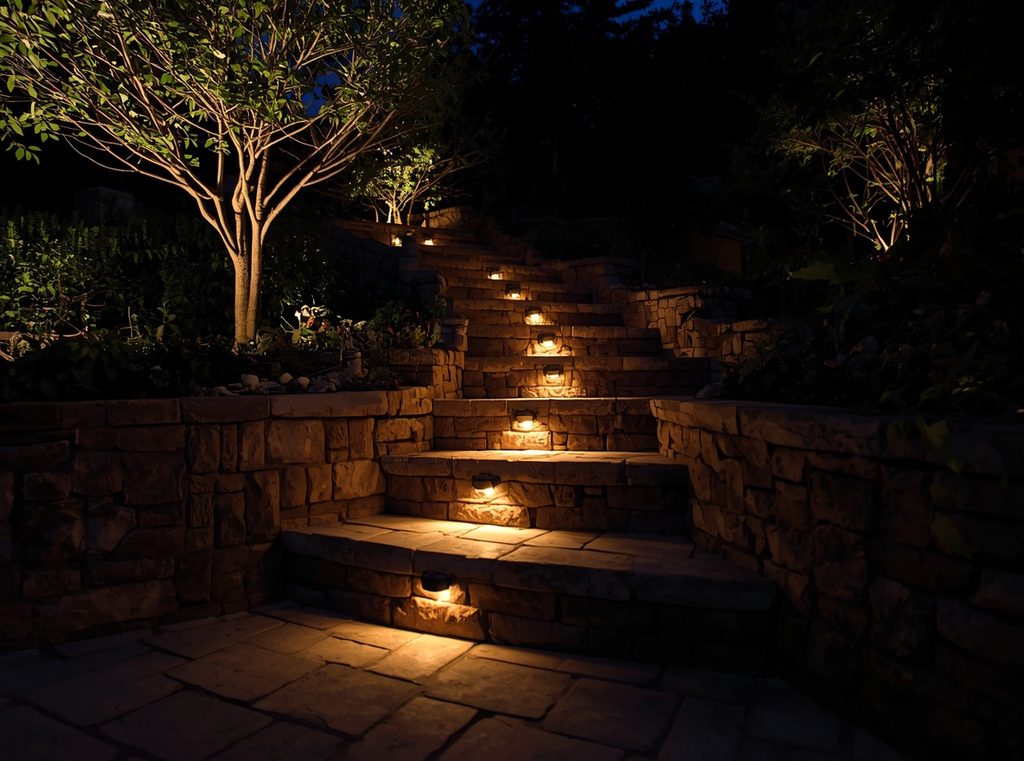
8. Put lights under steps
Step lighting is one of those details that makes a garden feel much more finished.
Small recessed or low-profile lights beneath stair edges help with visibility while keeping the fixture itself almost hidden. It works especially well on decks, stone steps and raised patios.
9. Light from below instead of above
Most indoor lighting comes from overhead, so outdoor spaces feel more interesting when the light comes from lower angles.
Use ground-level fixtures to catch the underside of leaves, trunks and branches. It creates shadows you would never see during the day and makes even simple plants look more sculptural.
10. Add tiny lights to a pergola
A pergola gives you a natural place to add soft overhead lighting.
You can use small string lights, discreet downlights or a few hanging fixtures. Keep the brightness low so the structure feels warm and sheltered rather than overly lit.
11. Use candlelight on the table
Not every outdoor light has to be wired or solar.
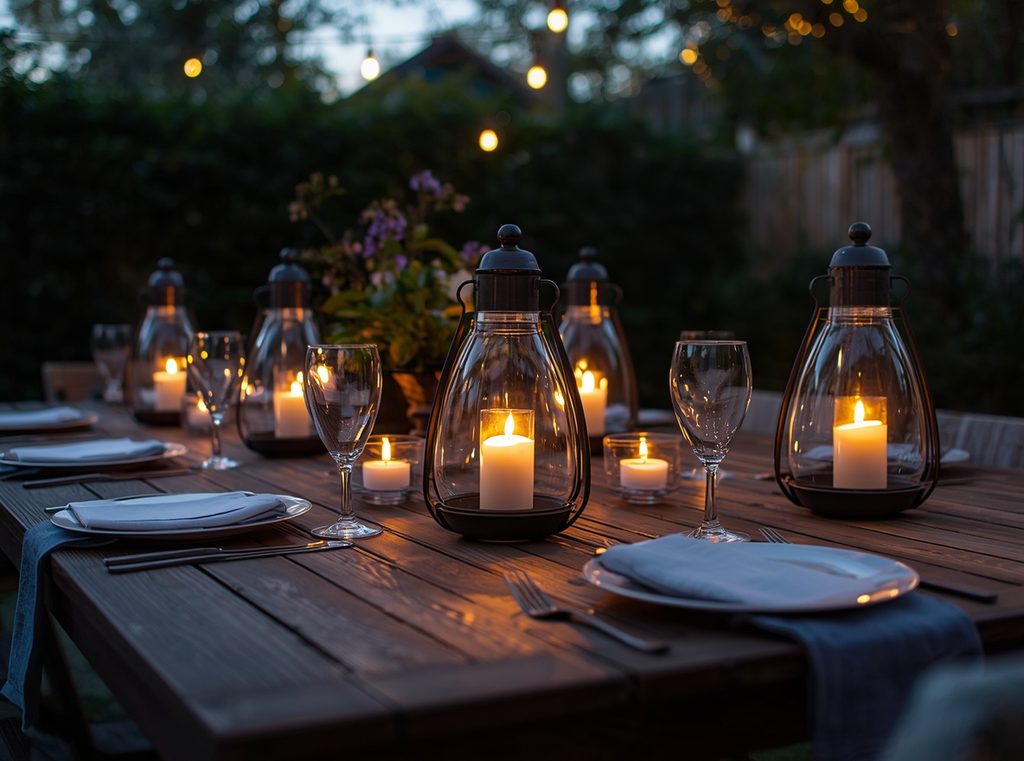
Candles can add a softer layer of light to an outdoor dining table or coffee table. Use hurricane lanterns or enclosed holders if there is wind, and keep them away from dry foliage and anything flammable.
12. Highlight tall ornamental grasses
Grasses are especially beautiful at night because even a small amount of light catches their movement.
Place a light slightly behind or beneath them so the blades glow around the edges. This works well near patios, along fences and in more natural garden beds.
13. Light a water feature
If you have a small pond, fountain or water bowl, lighting it can completely change the atmosphere after dark.
The reflection doubles the effect and gives the space a little movement. Keep the light subtle so the water stays the focus.
14. Use wall sconces near doors
Wall sconces are practical, but they can also help connect the house to the garden.
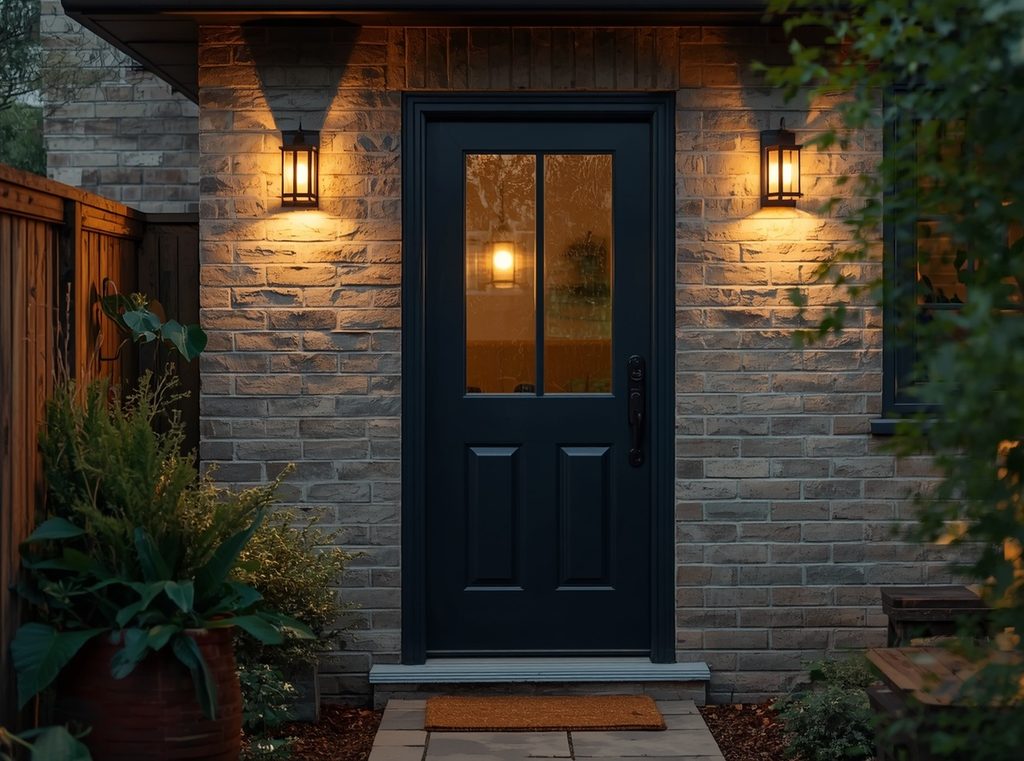
Choose fixtures that cast light downward or both up and down rather than flooding the whole yard. Warm bulbs will make the transition from indoors to outdoors feel much softer.
15. Add lighting inside large planters
A small uplight tucked into a large planter can turn an ordinary container into a nighttime feature.
This works particularly well with small trees, grasses or tall foliage. Hide the fixture beneath the leaves so you mostly see the effect rather than the hardware.
16. Backlight leaves
One of the prettiest lighting tricks is placing a light behind a plant rather than in front of it.
The leaves glow around the edges and the plant becomes a silhouette. Large-leaved plants, ferns and grasses all respond beautifully to this kind of lighting.
17. Use one pendant light outdoors
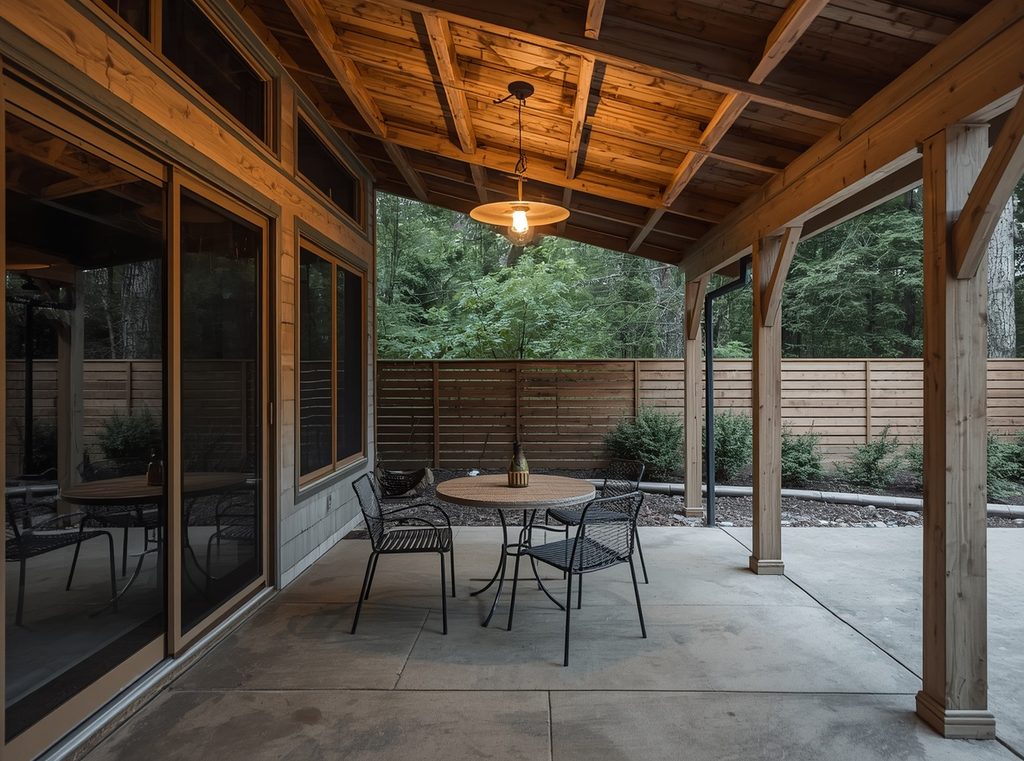
If you have a covered porch or pergola, one simple pendant can make the space feel much more like an outdoor room.
Choose something rated for outdoor use and keep the scale generous enough that it does not disappear visually. One larger fixture often looks cleaner than several small ones.
18. Light a bench from behind
A bench tucked into a garden can disappear completely at night.
A soft light placed behind or beside it can make the seating area feel intentional without shining directly in anyone’s eyes. This is especially nice in a more secluded corner of the yard.
19. Add tiny lights along a fence
A dark fence can make a small backyard feel boxed in after sunset.
A few evenly spaced sconces or low-profile lights can soften the boundary and make the space feel larger. Keep the light directed toward the fence or ground rather than outward into neighbouring yards.
20. Use lighting to lead the eye
You do not need to light every part of the garden equally.
Choose a few things you want people to notice, such as a tree, path, bench or garden wall, and light those. The darker areas between them create contrast and make the whole space feel deeper.
21. Hide the fixtures whenever possible
Good outdoor lighting is often most successful when you notice the glow before you notice the fixture.
Tuck lights behind plants, beneath shrubs or close to walls so they blend into the landscape. The more visible the hardware is, the more the garden can start to feel technical instead of natural.
22. Layer several kinds of light
The most inviting outdoor spaces rarely rely on one kind of lighting.
Combine a little practical path lighting with softer decorative lights near seating and one or two accent lights on plants or trees. Different heights and directions create depth, which makes the garden feel much more interesting after dark.
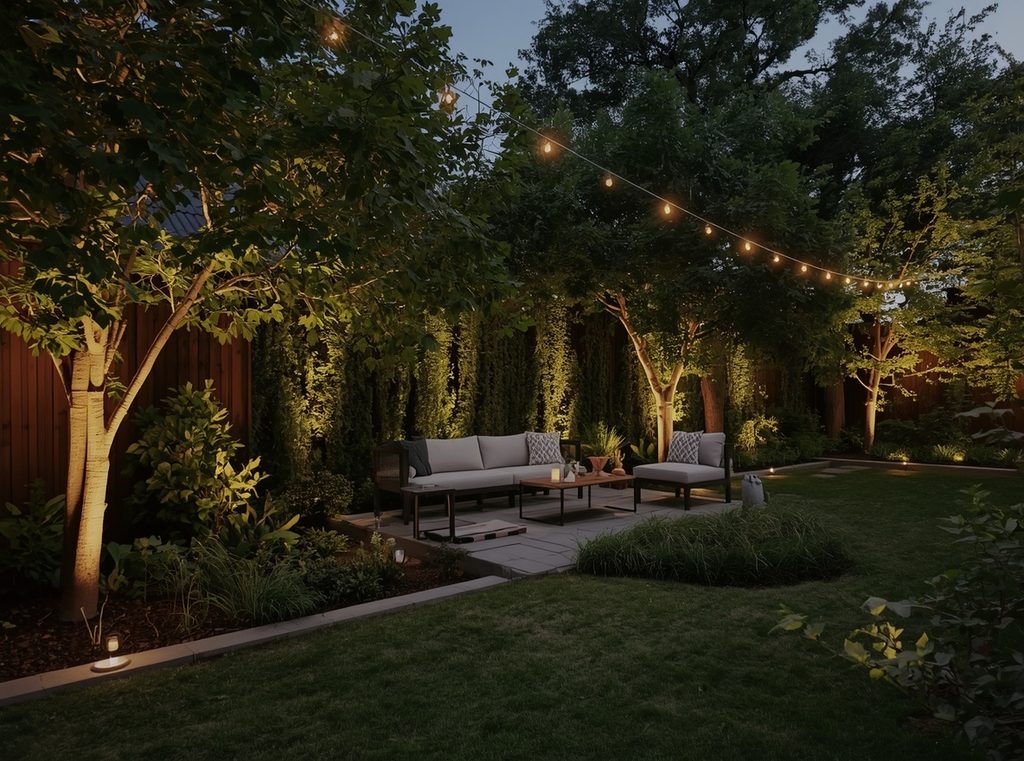
A simple outdoor lighting plan
If you are starting from scratch, I would not try to light the entire yard at once. Begin with the places you actually use and the routes you walk most often.
Add low path lights where you need visibility, then create a warmer pool of light around your main seating area. After that, choose one or two garden features to highlight, such as a tree, large planter or textured wall.
That combination usually gives you enough light to use the yard comfortably without washing out all the shadows that make a garden feel beautiful at night.
Keep it softer than you think
Outdoor lighting is one of those things that is easy to overdo.
More fixtures do not automatically make the garden look better. In fact, a little darkness between pools of light is what creates depth and keeps the whole space feeling calm.
Start with fewer lights, keep the colour warm and aim the glow toward the things you actually want to see.
The goal is not to make the backyard look like daytime. It is to make nighttime feel like its own version of the garden.