
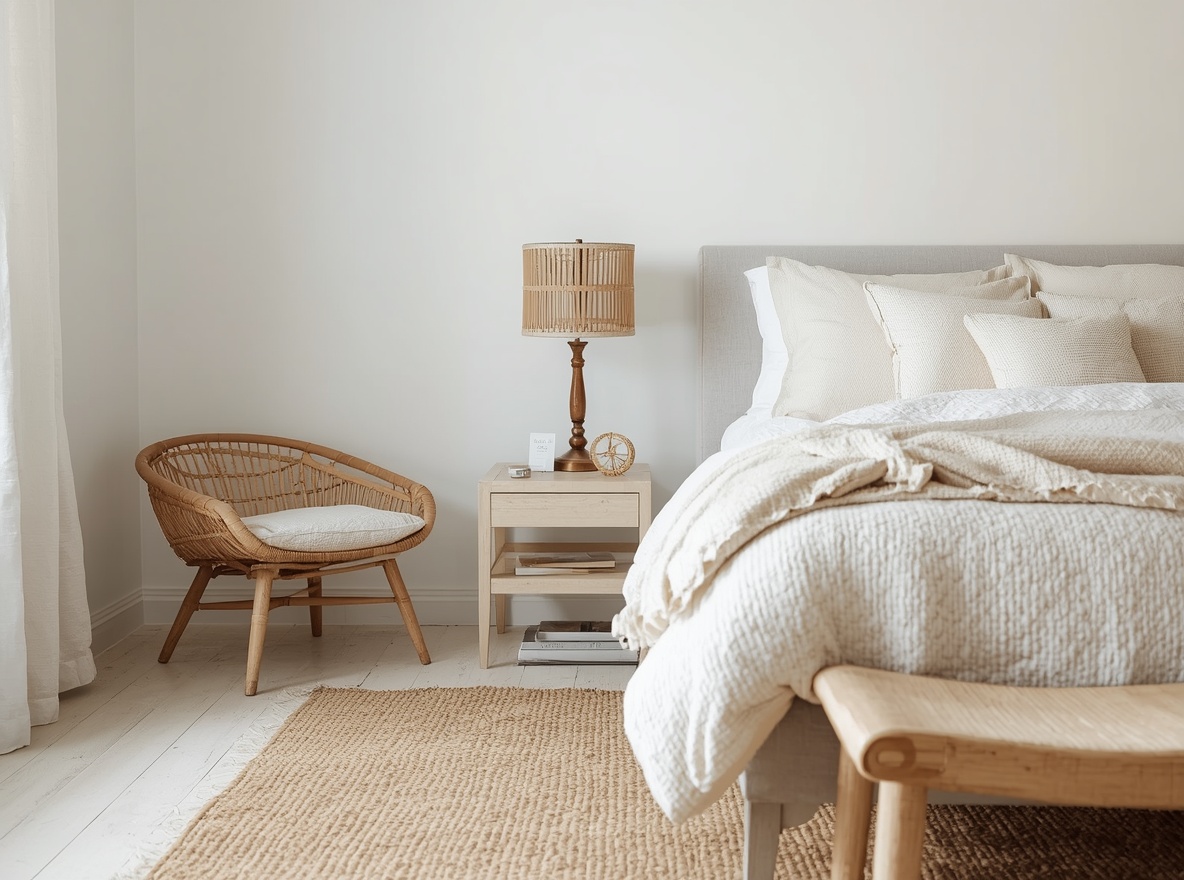
There is something about a warm neutral bedroom that makes your shoulders drop a little the second you walk in.
Not white-on-white. Not beige everything. And definitely not a room so perfectly styled that you are afraid to leave a glass of water on the nightstand.
The best neutral bedrooms have warmth, texture and just enough imperfection to feel lived in. Think rumpled linen, soft wood, woven baskets, creamy walls and a few things collected slowly rather than bought all at once.
If your bedroom feels a little cold, flat or unfinished, you probably do not need more stuff. You just need a few layers in the right places.
Here are 18 warm neutral bedroom ideas that make a room feel calmer, softer and much more inviting.
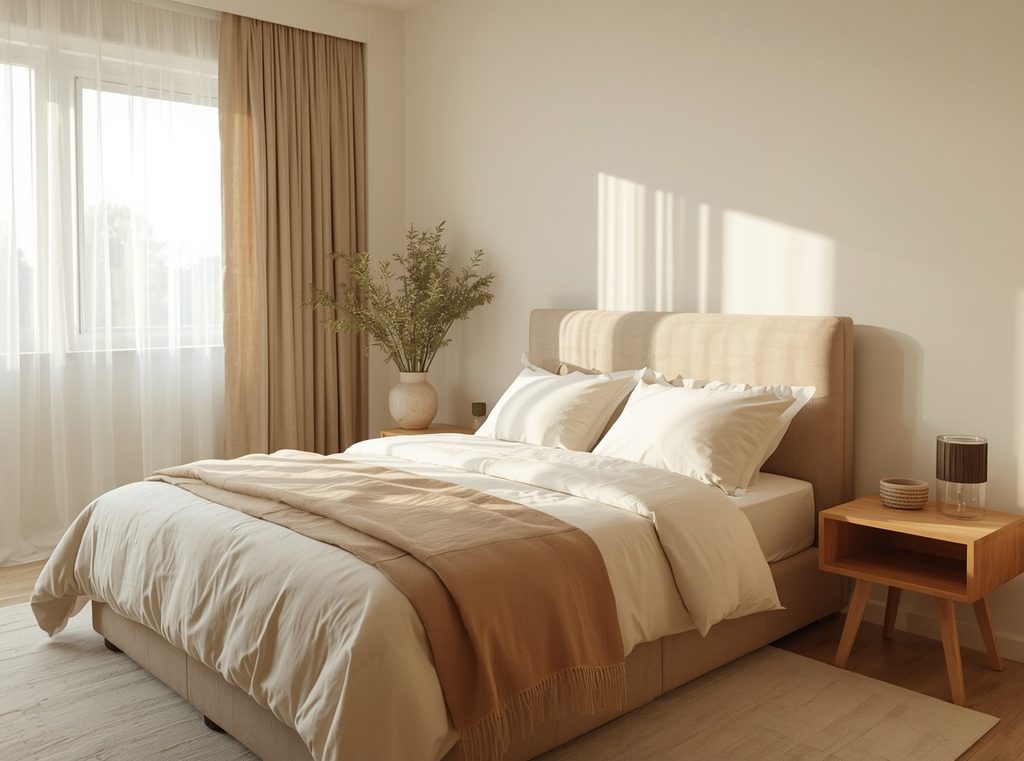
1. Start with warm white walls
Warm white is one of the easiest places to begin because it gives you a quiet background without making the room feel stark.
Look for whites with cream, beige or very soft yellow undertones rather than anything bright or blue-toned. In a bedroom, those warmer colours tend to feel much softer when the sun goes down.
You do not need to obsess over finding the perfect shade. Bring home a few samples and look at them in the morning, afternoon and evening. Paint can change dramatically depending on the light in your room.
2. Use more than one shade of beige
A neutral room usually starts looking boring when everything is exactly the same colour.
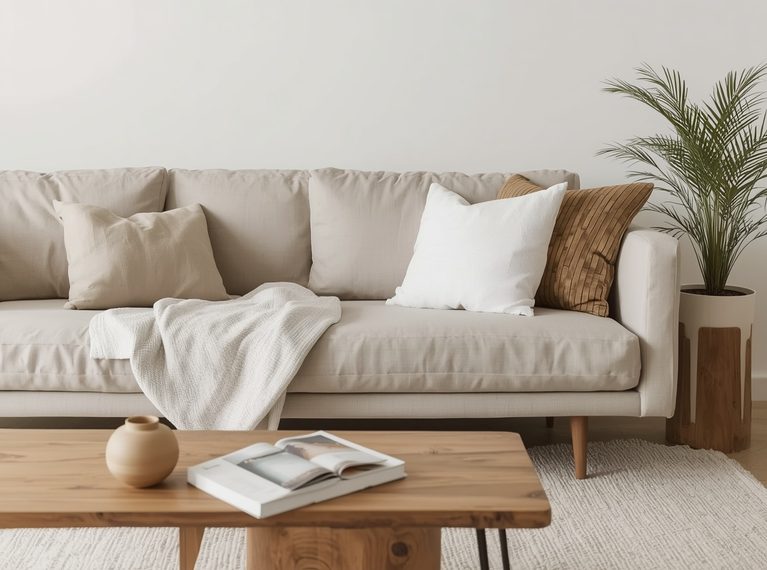
Instead, layer several related tones together. Cream bedding, oatmeal curtains, a sand-coloured rug and a slightly darker taupe throw can all live happily in the same room.
The small differences are what give the room depth.
3. Bring in natural wood
Wood immediately warms up a neutral bedroom, especially when the rest of the room is fairly light.
A wooden bed frame is lovely, but you can get the same effect from something much smaller. Try a simple oak nightstand, an old wooden bench, a vintage stool or even a few wood picture frames.
Do not worry too much about matching every wood tone. Rooms often feel more natural when the pieces are slightly different.
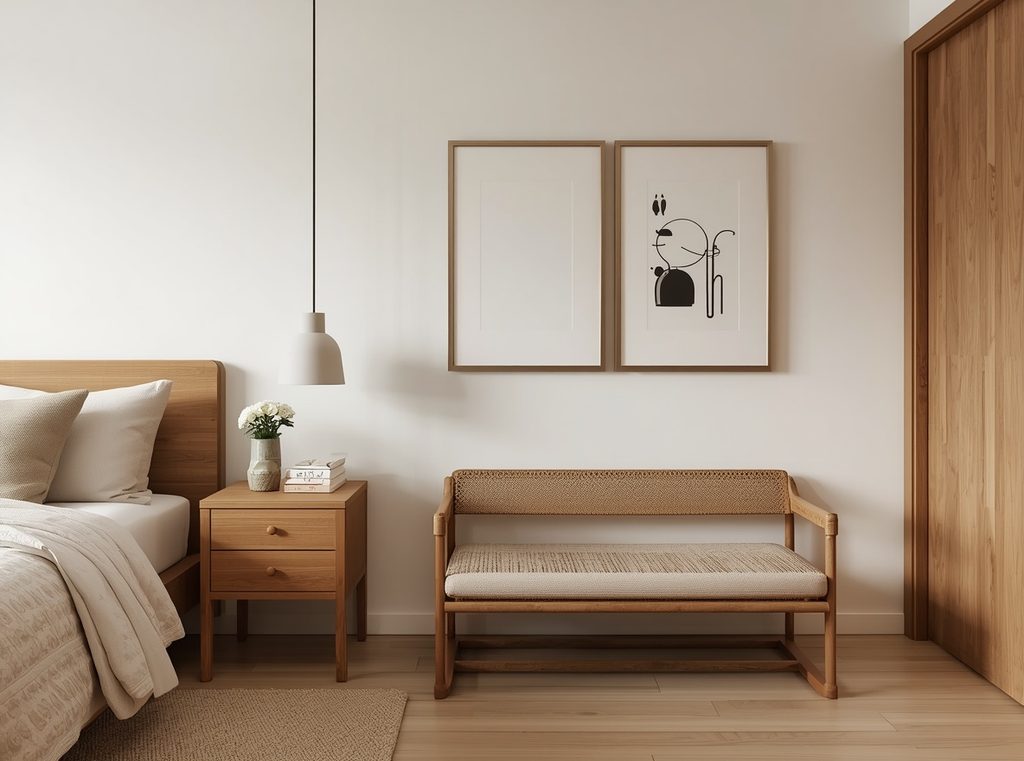
4. Choose linen bedding
If there is one material that almost always works in a relaxed bedroom, it is linen.
It has that slightly rumpled texture that makes a bed look inviting instead of overly styled. It also gets softer with use, which is exactly what you want from bedding.
Natural flax, warm white, clay, mushroom and muted olive all work beautifully in a neutral room.
And no, you do not have to iron it. The wrinkles are part of the point.
5. Layer the bed instead of piling on pillows
You do not need seventeen decorative pillows to make a bed feel cozy.
A simple combination usually looks better anyway: your regular sleeping pillows, one or two larger pillows behind them and maybe a single lumbar cushion in front.
Then add the softness with layers. A duvet, quilt or coverlet and one throw folded loosely at the end of the bed is plenty.
The goal is a bed you actually want to climb into, not one you have to dismantle every night.
6. Add something woven
Woven materials are especially useful in neutral rooms because they add interest without adding much colour.
A jute rug, rattan lamp, cane headboard, seagrass basket or woven bench can break up all the soft fabrics and smooth walls.
Even one woven piece can make the room feel more layered.
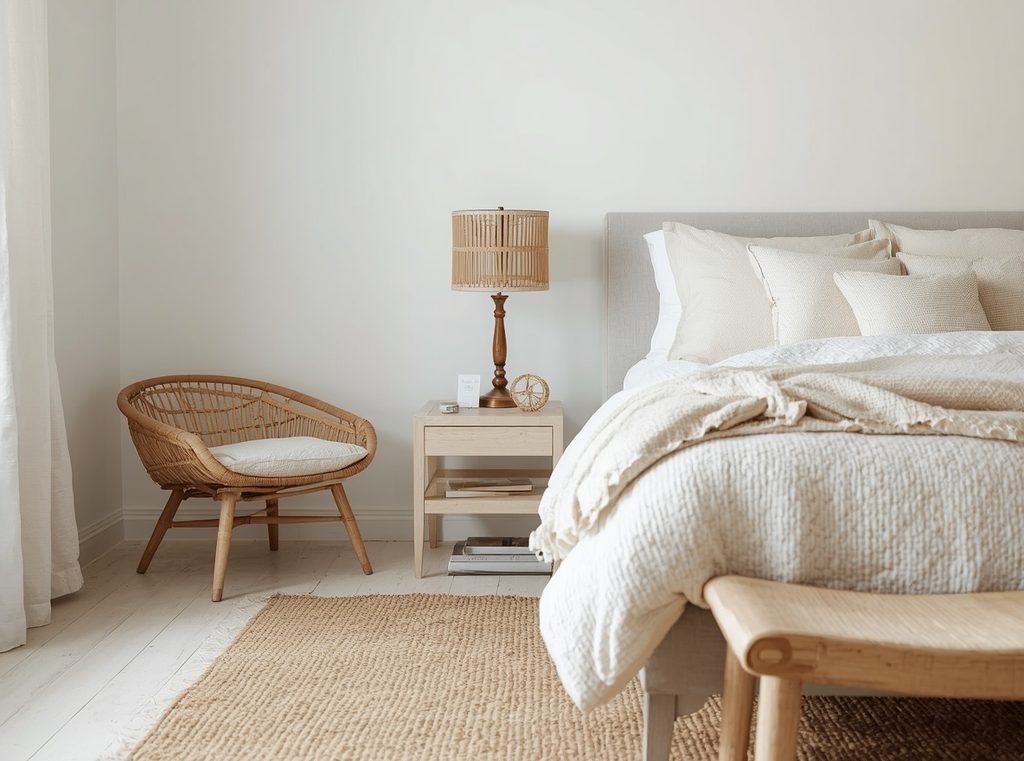
7. Skip the matching bedroom set
Perfectly matching furniture can make a bedroom feel more like a furniture showroom than a home.
If you already have a matching set, you certainly do not need to replace it. Just break things up a little.
Swap one nightstand for a small table. Add an old wooden chair in the corner. Use a vintage dresser on the opposite wall.
A room feels more interesting when it looks like it came together over time.
8. Add one darker colour
Warm neutral does not mean everything has to be pale.
A little contrast actually makes all of those soft colours look better.
Try dark brown, charcoal, black, deep olive or even a muted burgundy in very small amounts. A lamp base, picture frame, blanket or bedside table is enough.
Without any darker tones, a beige room can start to disappear into itself.
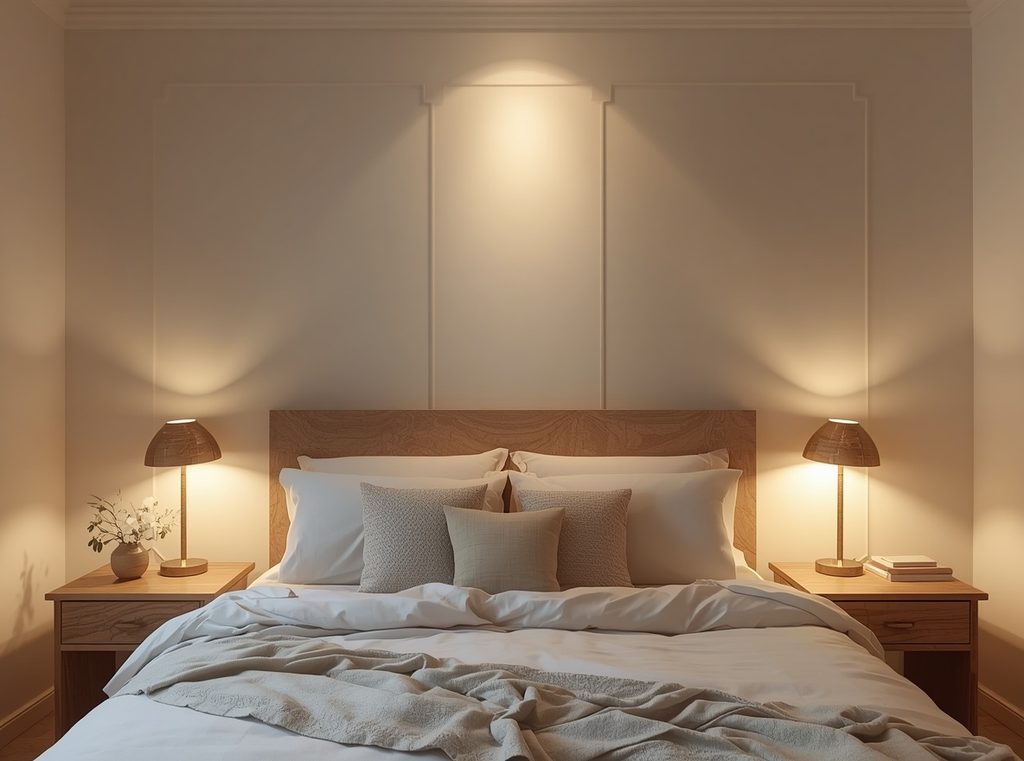
9. Choose softer lighting
Overhead lighting has a way of making even the coziest bedroom feel strangely clinical.
Bedside lamps will almost always give you nicer light in the evening. If you have room, a small floor lamp in a corner can make the whole space feel softer too.
Warm bulbs matter here. Around 2700K is usually a good choice for a bedroom.
If your current bulbs give off that cold white office glow, changing them might be the cheapest bedroom makeover you ever do.
10. Hang curtains higher
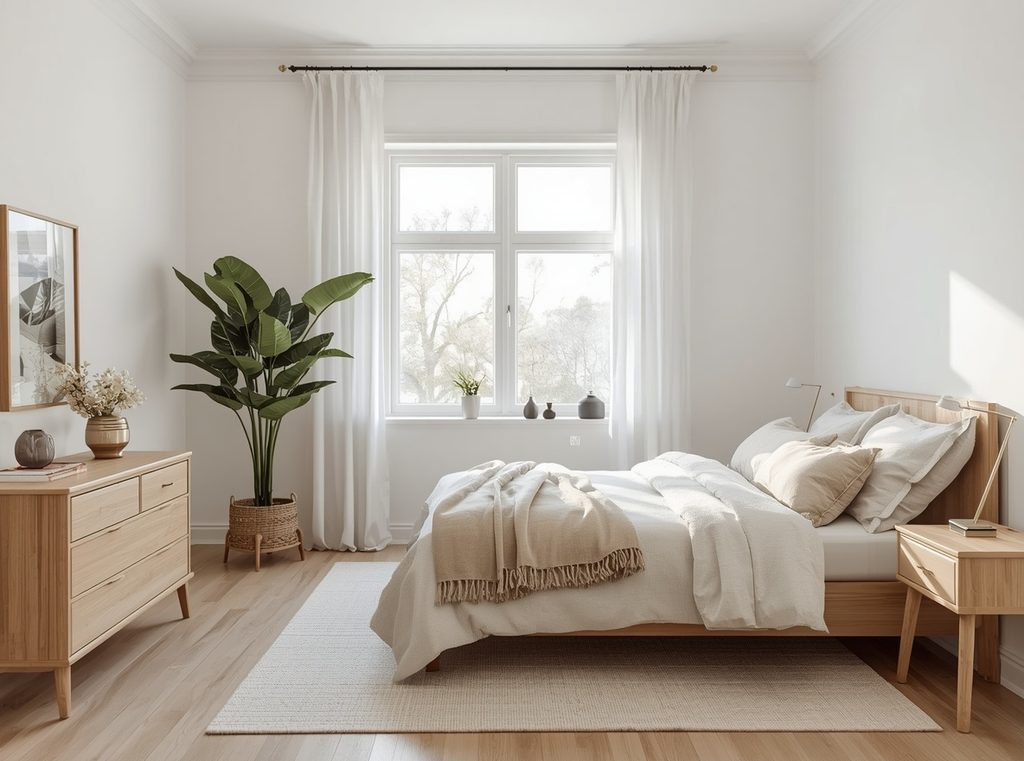
Curtains can completely change the proportions of a room.
Instead of hanging the rod right above the window frame, bring it closer to the ceiling and extend it several inches past the window on either side.
The window will look larger, the ceiling will feel higher and you will get that soft curtain-to-floor look that makes bedrooms feel finished.
Linen or linen-look curtains in warm white, oatmeal or natural beige are hard to get wrong.
11. Let the rug be bigger than you think
A tiny rug floating beside the bed tends to make the entire room feel smaller.
If you are adding an area rug, choose one large enough to extend beyond the sides of the bed where your feet actually land.
For a queen bed, an 8 by 10 foot rug often works well. A king usually looks better with something larger.
You can also layer a soft rug over hard flooring or even over low-pile carpet if the room needs more texture.
12. Bring in a little green
Plants and warm neutral rooms are very good friends.
You do not need a bedroom full of them. One larger plant in a corner, a trailing plant on a dresser or a small branch clipped from outside can be enough to make the room feel alive.
The green breaks up all the beige and wood without making the room feel colourful.
If your bedroom gets terrible light, dried branches or even a simple vase of leafy stems works too.
13. Use art with breathing room
You do not have to fill every empty wall.
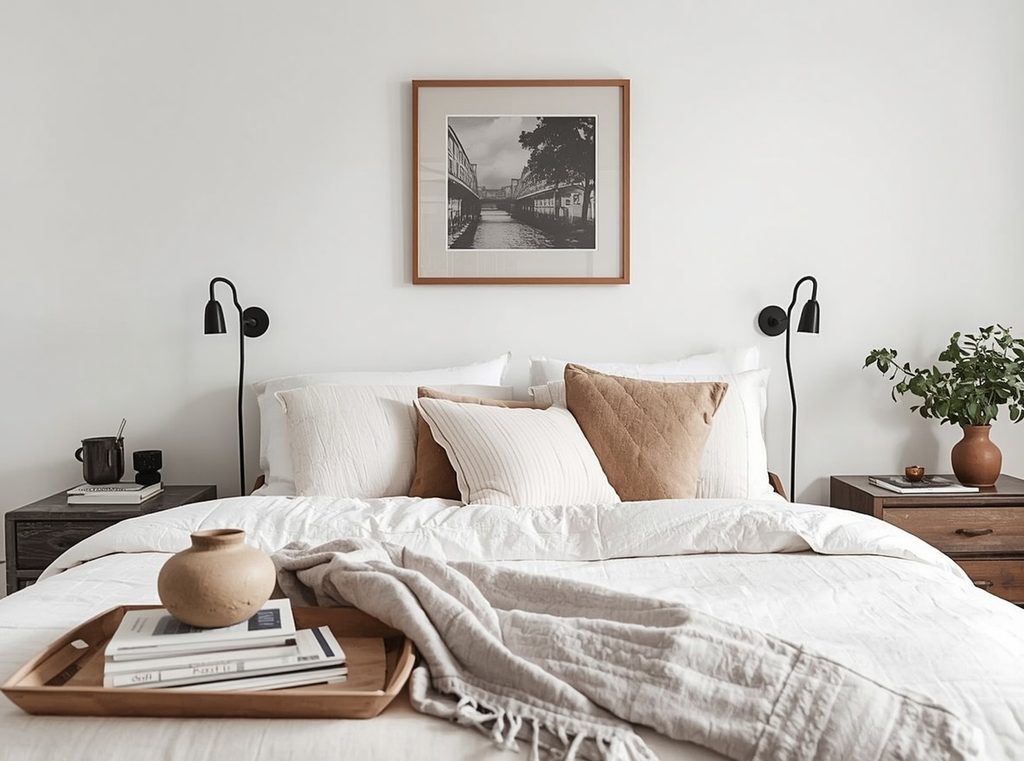
One larger piece of art often feels calmer than a busy gallery wall, particularly above a bed or dresser.
Look for landscapes, botanical sketches, simple abstracts or vintage prints with earthy colours and plenty of negative space.
And if you find something you love at a flea market or thrift shop, even better. A slightly imperfect old frame usually brings more character to a neutral room than something perfectly coordinated.
14. Add something old
This might be my favourite trick for keeping a neutral room from feeling too new.
Add one thing with some age to it.
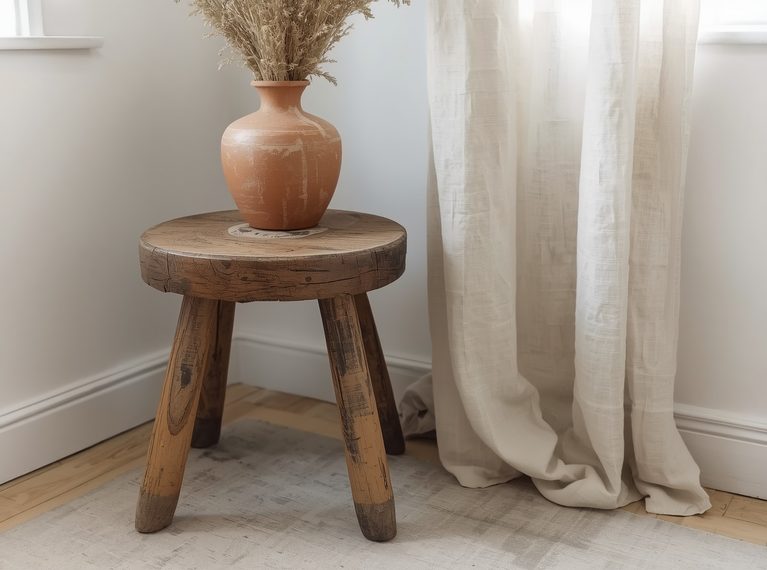
An old stool. A small antique table. A vintage landscape. A worn wooden box on the dresser. A pottery vase that clearly did not come from the same store as everything else.
It does not have to be valuable. It just needs a little history.
Modern neutral rooms can get flat very quickly when every single piece is brand new.
15. Keep your nightstand simple
A nightstand is one of those places where clutter seems to reproduce overnight.
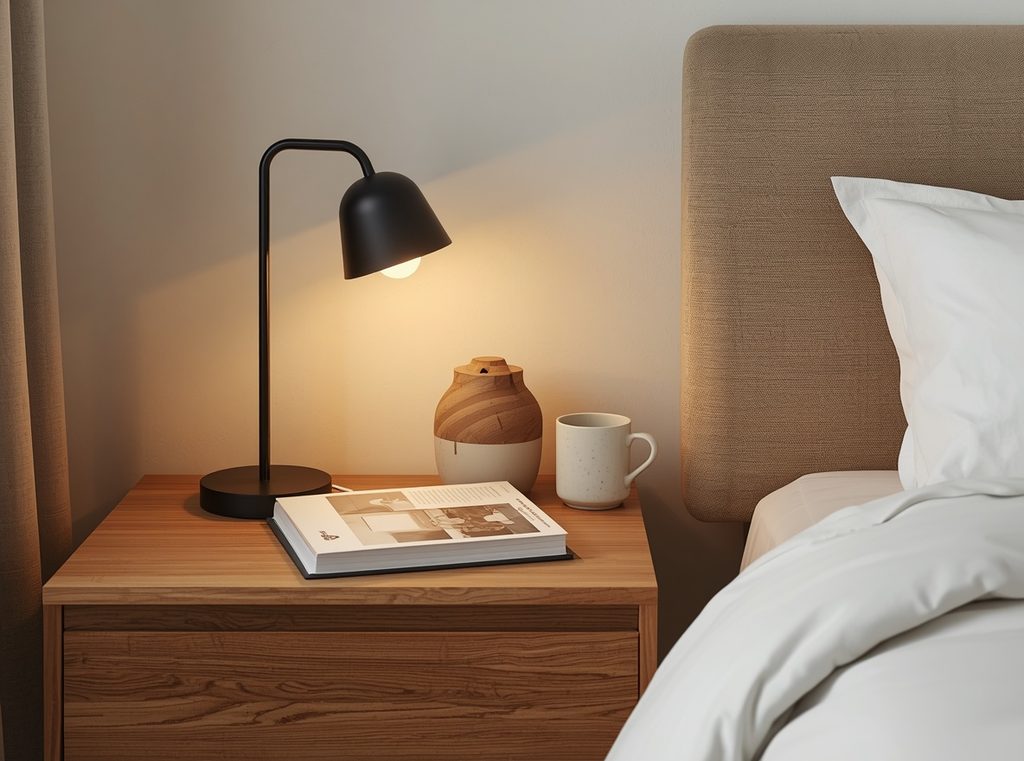
Try keeping only what you actually use there. A lamp, your current book, a glass of water and maybe one small object you love.
If you need chargers, hand cream, medications or other less photogenic necessities close by, a nightstand with a drawer is worth its weight in gold.
The room will feel calmer even if nothing else changes.
16. Use texture where you would normally add colour
When a room feels boring, the instinct is often to add a brighter colour.
Sometimes what it actually needs is texture.
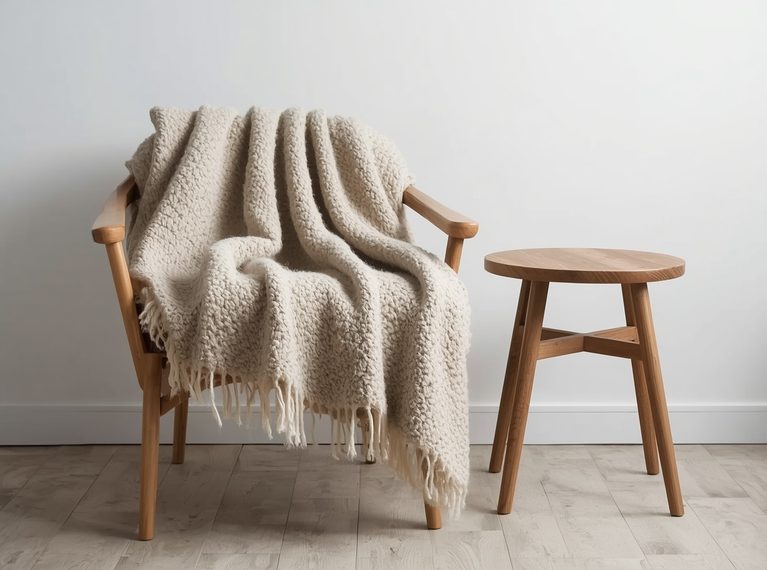
Try a chunky wool blanket, a nubby boucle cushion, a quilted coverlet, woven curtains or a slightly rough plaster lamp.
You can keep the whole palette quiet and still have plenty to look at.
17. Leave some empty space
This one is surprisingly hard.
Every corner does not need a plant. Every wall does not need artwork. Every dresser does not need a carefully styled collection of objects.
Empty space is part of what makes a calm room feel calm.
If you have been adding things and your bedroom somehow feels less finished instead of more, try taking three things away.
You might be surprised by how much better the room feels.
18. Make it personal
The nicest bedrooms are never completely trend-driven.
They have something that belongs specifically to the person who sleeps there.
A stack of dog-eared books. A photograph from a trip. Your grandmother’s quilt. A piece of art your child made. A little dish you bought ten years ago and still love.
Those are the things that stop a neutral room from becoming anonymous.
The secret is warmth, not more stuff
If your neutral bedroom feels flat, resist the urge to immediately buy more decor.
Start with the things that change how the room feels: softer light, warmer colours, natural materials and a few different textures.
Then live with it for a while.
The loveliest rooms usually are not finished in a weekend anyway. They grow slowly. A better lamp here, an old chair found somewhere else, a blanket you keep because it is ridiculously soft.
Eventually the room starts to feel less like something you decorated and more like somewhere you belong.