
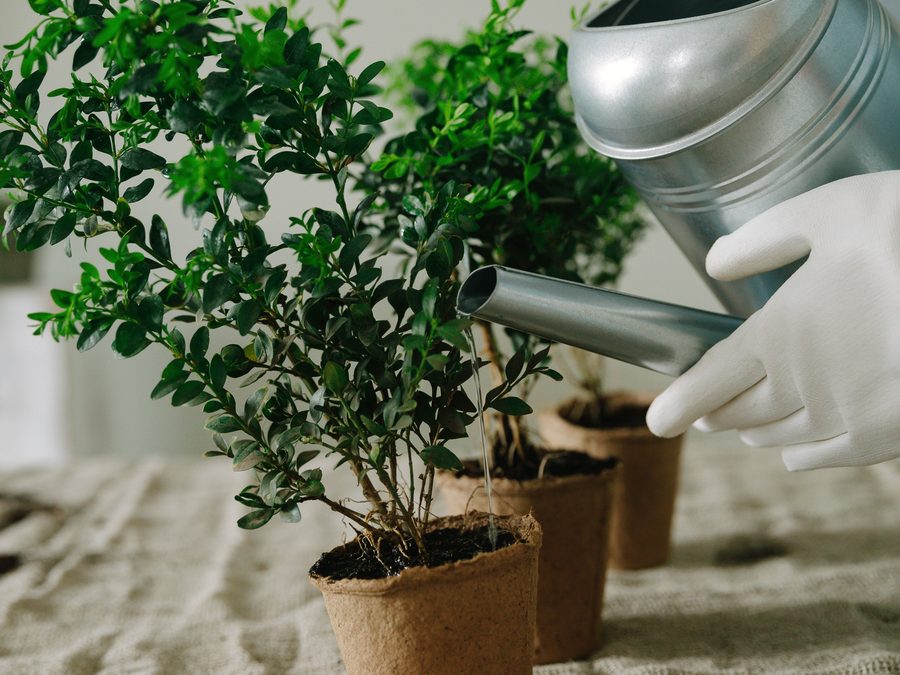
There is no perfect houseplant watering schedule.
Not every seven days. Not every Tuesday. Not even “once the top inch is dry” for every plant in every home.
The simplest rule is this: water the plant when the soil tells you it needs water, not when the calendar does.
That sounds almost too simple, but it solves most watering problems. Different plants dry out at different speeds, and the same plant can need water twice as often in July as it does in January.
Once you learn how to check the soil instead of following a schedule, houseplant care gets much easier.
The only rule you really need
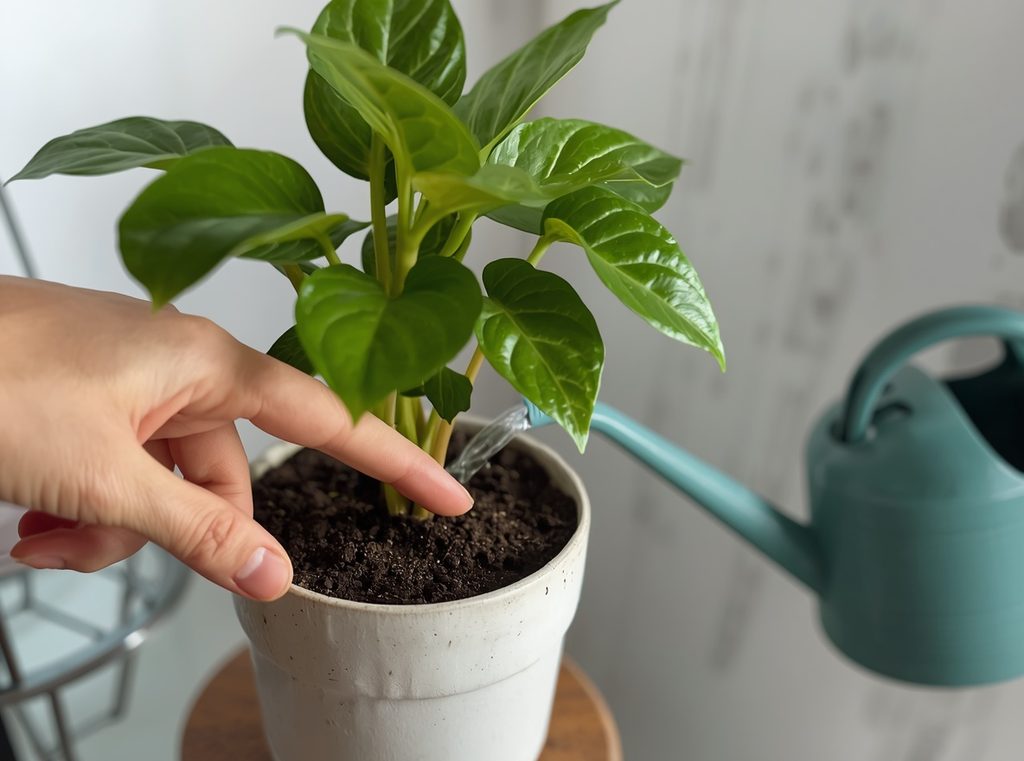
Before watering, check the soil.
Push your finger into the top inch or two and feel what is happening below the surface. If it still feels damp, wait. If it feels dry and your plant prefers to dry somewhat between waterings, it is probably time.
For larger pots, you may need to check deeper because the top can feel dry while the soil around the roots is still holding plenty of moisture.
This one habit is far more useful than trying to remember how many days have passed since you last watered.
Why watering schedules do not work
A plant’s water use changes constantly. Light, temperature, humidity, pot size, soil type and the season all affect how quickly moisture disappears.
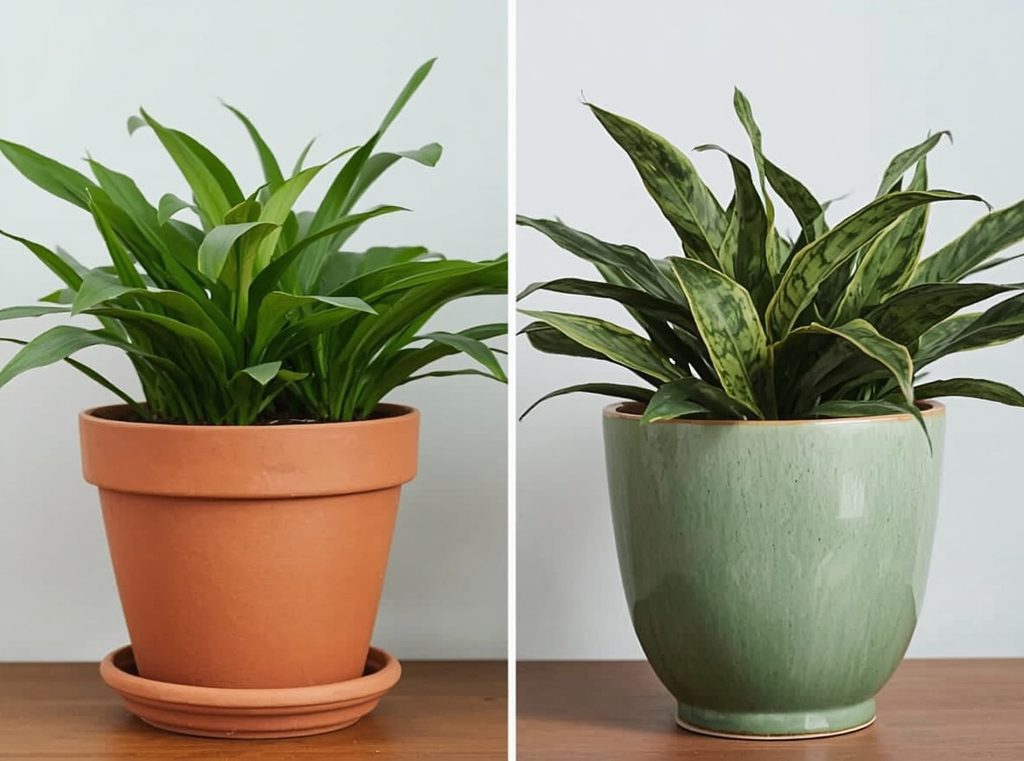
A pothos beside a bright summer window might dry out in five days, while the same plant could take two weeks in winter. A small terracotta pot can dry quickly, while a large glazed ceramic pot may stay wet much longer.
If you water both on the same weekly schedule, one may be perfectly happy while the other slowly develops root rot.
Most houseplants would rather be slightly dry than constantly wet
Overwatering is one of the most common reasons houseplants struggle, but the problem is not usually the amount of water you pour in at once.
It is watering too frequently and keeping the roots constantly wet.
Roots need oxygen as well as moisture. If the soil never gets a chance to dry appropriately, the roots can begin to rot and the plant may start yellowing, wilting or dropping leaves.
That is why checking the soil first matters so much.
When you do water, water properly
Once a plant actually needs water, give it a thorough drink.
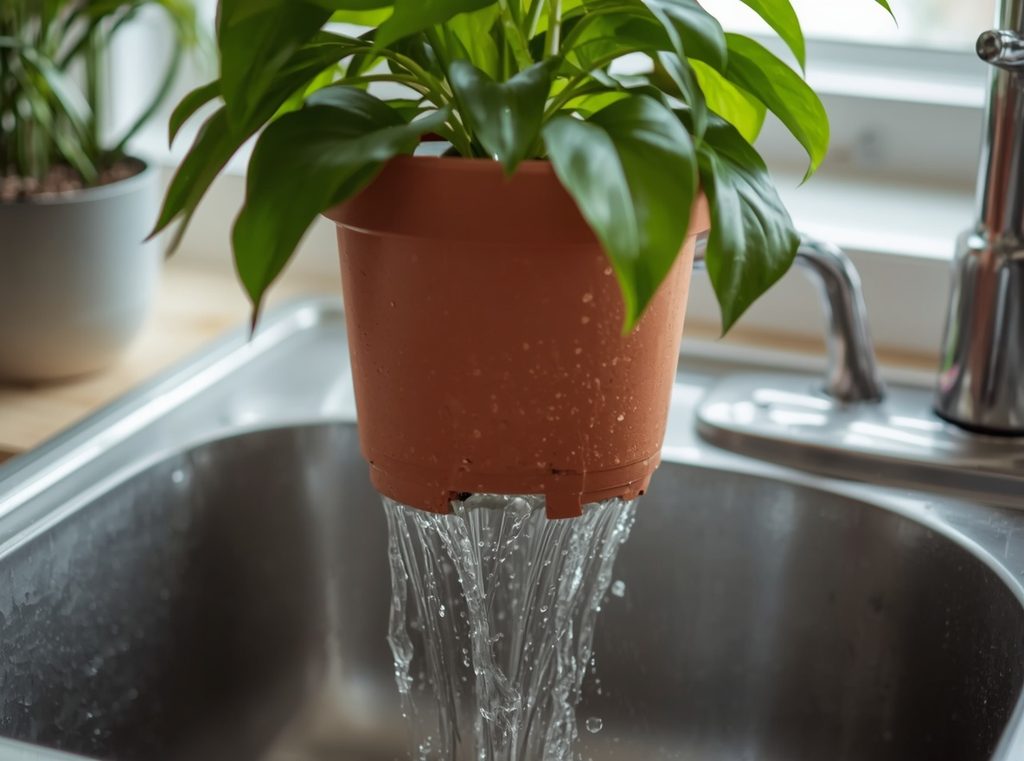
Water slowly until excess begins draining from the bottom of the pot. This helps evenly moisten the root ball instead of only wetting the top layer.
Then empty any water that collects in the saucer or decorative outer pot so the roots are not sitting in it for hours.
A tiny splash every couple of days is usually less helpful than a proper watering followed by enough time for the soil to dry again.
What does dry soil actually feel like?
Dry potting mix usually feels lighter, looser and less cool than damp soil. If you press a finger into it, it may crumble instead of sticking slightly to your skin.
You can also learn to judge moisture by lifting the pot. A freshly watered plant feels noticeably heavier than the same plant after the soil has dried.
Over time, this becomes surprisingly intuitive. You may eventually be able to pick up a pot and know immediately whether it needs water.
Different plants like different levels of dryness
The soil-checking rule still works for almost every houseplant, but the point at which you water will vary.
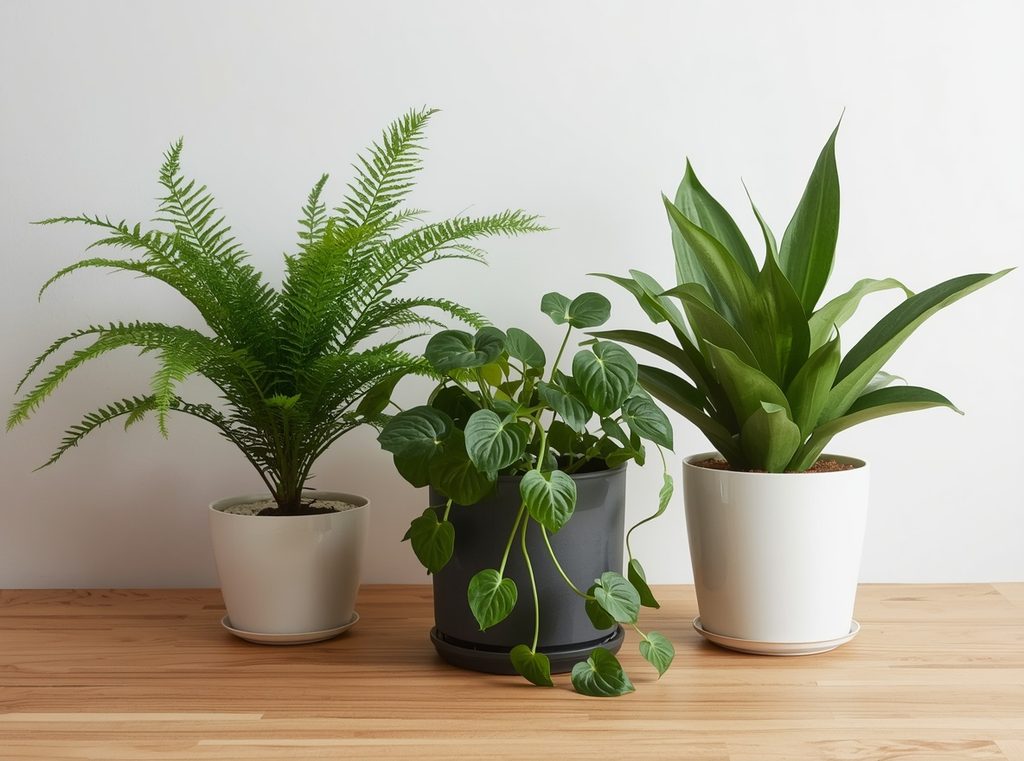
Plants like pothos, philodendrons, monsteras and many common tropical houseplants usually appreciate being watered after the upper portion of the soil has dried. Snake plants, ZZ plants, aloe and many succulents should generally dry much more thoroughly before being watered again.
Ferns and some moisture-loving plants prefer more consistent moisture and should not be allowed to dry out completely.
You do not need to memorize a complicated schedule for each one. You just need to know whether your plant prefers its soil slightly moist, partly dry or mostly dry before its next drink.
Light changes everything
The amount of light a plant receives has a huge effect on how quickly it uses water.
A plant in bright light is actively growing and photosynthesizing more, so its soil will usually dry faster. The same species sitting several feet away in a darker corner may use water much more slowly.
This is another reason watering instructions like “once a week” can be misleading. Two identical plants in the same house can still have completely different watering needs.
You will probably water less in winter
Houseplants often grow more slowly during the darker months, especially in climates with shorter winter days. Less growth usually means less water use.
If you continue watering at the same frequency you used during summer, the soil may stay wet for too long.
Keep checking the soil exactly the same way, but do not be surprised if you start going much longer between waterings once the seasons change.
Pot size matters too
A tiny pot can dry out incredibly quickly because there simply is not much soil holding moisture. Larger pots usually dry more slowly, especially if the plant itself is small compared with the container.
This is one reason moving a plant into a dramatically oversized pot can cause problems. All that extra soil may remain wet long after the roots have taken up the water they need.
When repotting, move up gradually rather than putting a small plant into a giant container.
The type of pot makes a difference
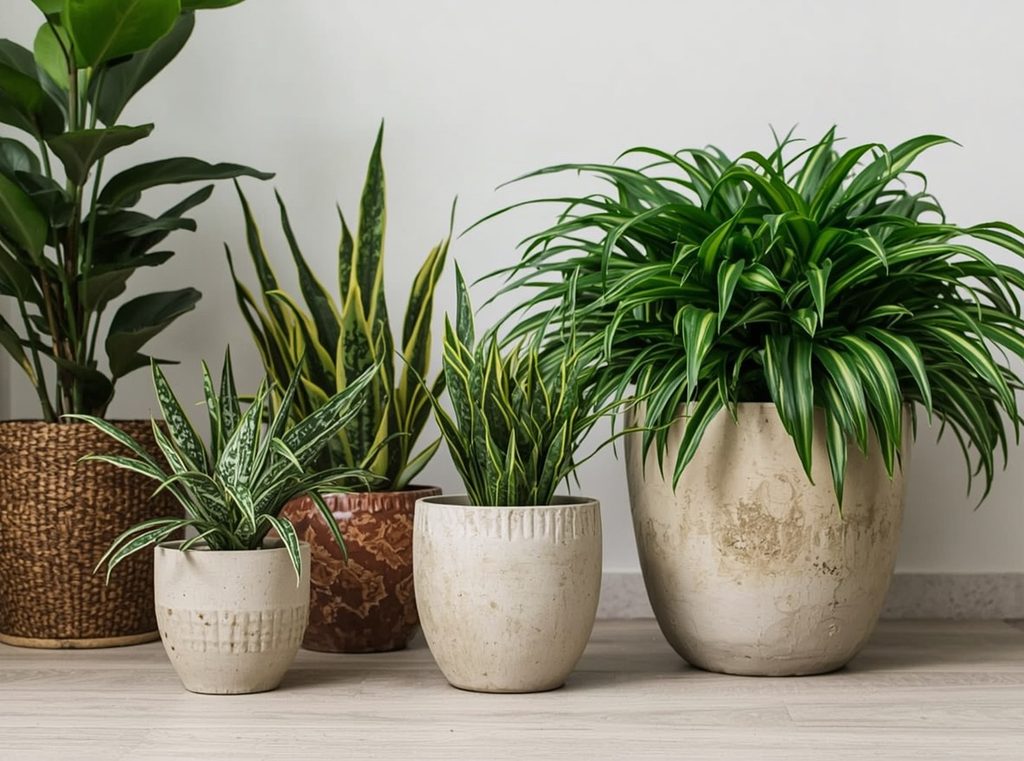
Terracotta is porous, so moisture can escape through the sides of the pot. Plants in terracotta generally dry faster than plants in plastic or glazed ceramic containers.
That can be helpful for plants that dislike staying wet, but it also means you may need to check them more frequently.
Whatever type of pot you use, drainage holes are important. They give excess water somewhere to go and make proper watering much easier.
Signs a plant might need water
Dry soil is a much better clue than waiting for your plant to look miserable, but there are some visible signs that can help.
Leaves may begin to droop, curl or feel softer than usual. Some plants, like peace lilies, are especially dramatic and can look completely defeated when they get thirsty.
Try not to rely on wilting alone, though. Overwatered plants can wilt too, which is why checking the soil should always come first.
Signs you may be watering too much
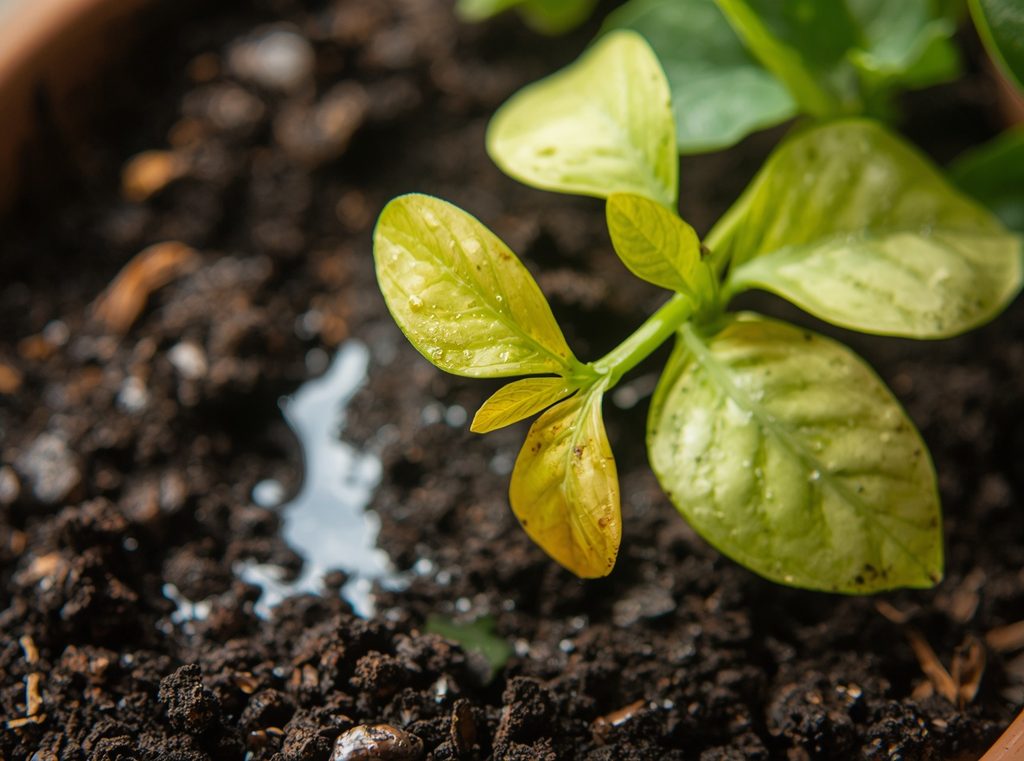
Yellowing leaves, consistently wet soil, fungus gnats, a musty smell or soft dark roots can all point toward too much moisture.
If the plant is sitting in wet soil for a long time after every watering, the problem may also be poor drainage, dense soil or a pot that is too large.
Do not respond to yellow leaves by automatically adding more water. Check the soil first.
Should you use a moisture meter?
You can, but you do not really need one.
A moisture meter can be useful for very large pots where it is difficult to reach the root zone, but inexpensive meters are not always perfectly accurate. They can also encourage you to trust a number instead of paying attention to the plant and soil.
Your finger, the weight of the pot and a little experience are usually enough for most everyday houseplants.
What time of day should you water?
For indoor plants, the exact hour matters much less than people sometimes make it sound.
Morning is convenient because the plant has the whole day ahead of it and any water splashed onto leaves has time to dry, but watering your pothos at 6 p.m. is not going to ruin it.
It is much more important to water when the soil actually needs it and make sure excess water can drain away.
A simple routine that actually works
Instead of putting every plant on a watering schedule, put yourself on a checking schedule.
Once or twice a week, walk around and check the soil in your plants. Some will need water and some will not. Water the ones that are ready and leave the others alone.
This gives you the convenience of a routine without forcing every plant into the same timetable.
If you are still unsure, wait another day
For most common houseplants, being a little late with water is easier to recover from than keeping the roots constantly wet.
If you check the soil and genuinely cannot tell whether it is dry enough yet, give it another day and check again.
The goal is not to become perfect at watering. It is to stop watering automatically.
Check the soil, learn what your particular plants prefer and let them tell you when they are ready. That really is the rule.