
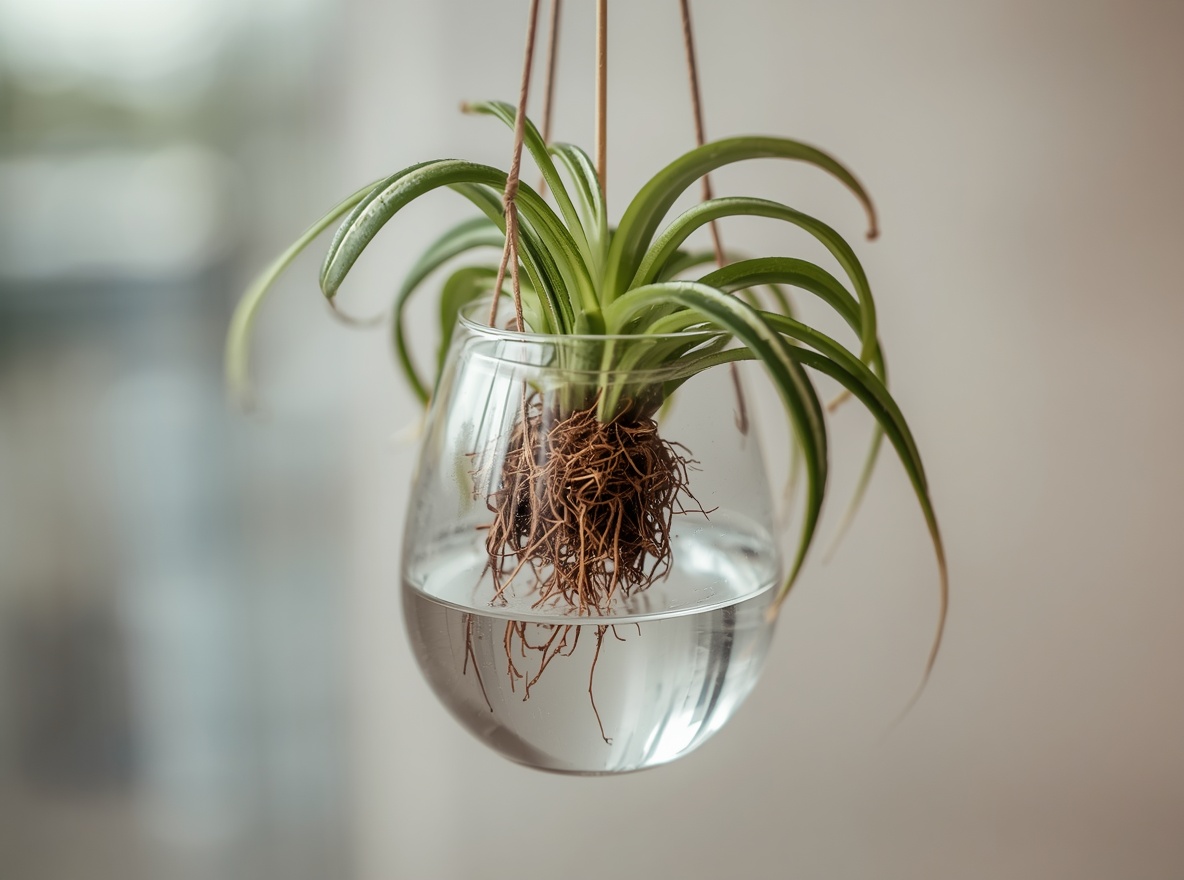
If you have ever looked at a houseplant and thought, I wonder if I can make another one of these for free, the answer is very often yes.
Water propagation is one of the easiest ways to grow new plants because you can actually see what is happening. You take a cutting, put it in water and wait for roots to appear. There is no guessing about whether anything is happening under the soil, and you do not need much more than a clean pair of scissors, a glass jar and a bright spot near a window.
Some plants are much easier than others, especially if you are completely new to propagating. The ones below are forgiving, root fairly quickly and do not require any special equipment or plant knowledge.
1. Pothos
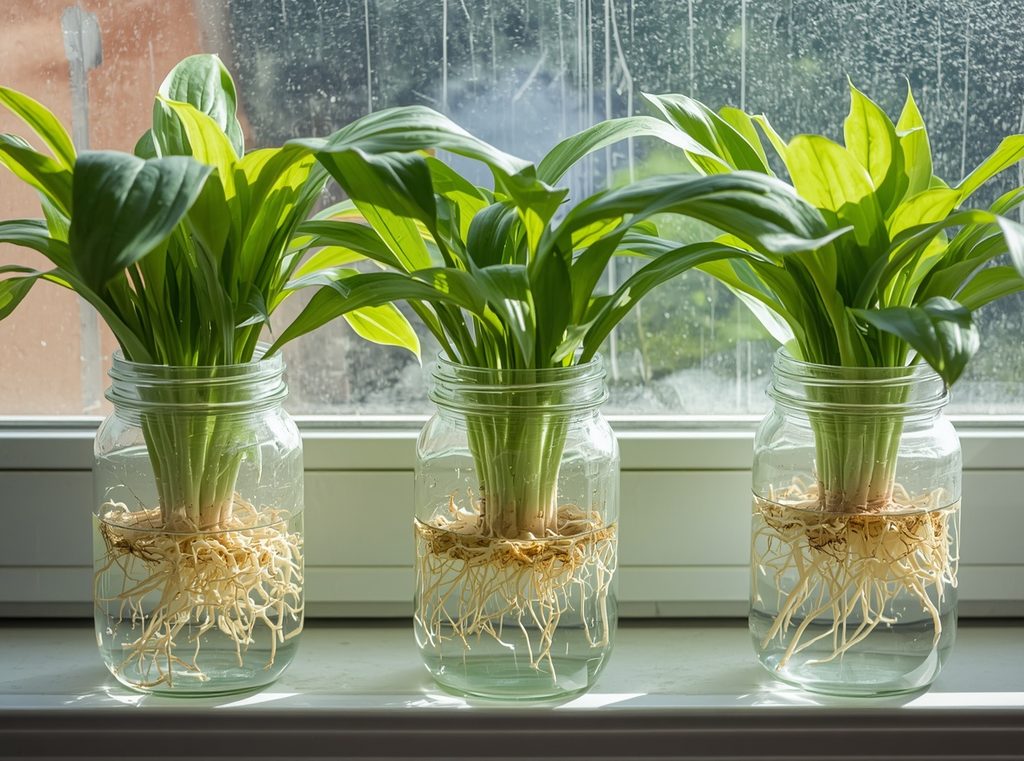
Pothos is probably the plant I would recommend first if you have never propagated anything before. It roots quickly, tolerates a lot of different conditions and gives you very obvious nodes along the vine, so it is easy to see exactly where to cut.
Take a section of vine with at least one or two leaves and make your cut just below a node, which is the little bump where the leaf meets the stem. Remove any leaf that would sit underwater, then place the cutting in a glass with the node submerged.
You will often start seeing small roots within a week or two. Once the roots are a few inches long and starting to branch, you can move the cutting into potting soil or leave it growing in water for a while longer.
2. Philodendron
Heartleaf philodendron propagates almost exactly like pothos, which is one reason the two plants are so easy to confuse. Look for a healthy vine, cut just below a node and place that section into water with the leaves above the surface.
Philodendrons tend to root reliably and are very forgiving if you forget about the jar for a few days. They also grow quickly once established, so one mature plant can eventually give you plenty of cuttings to share, pot separately or add back into the original pot to make it look fuller.
3. Monstera
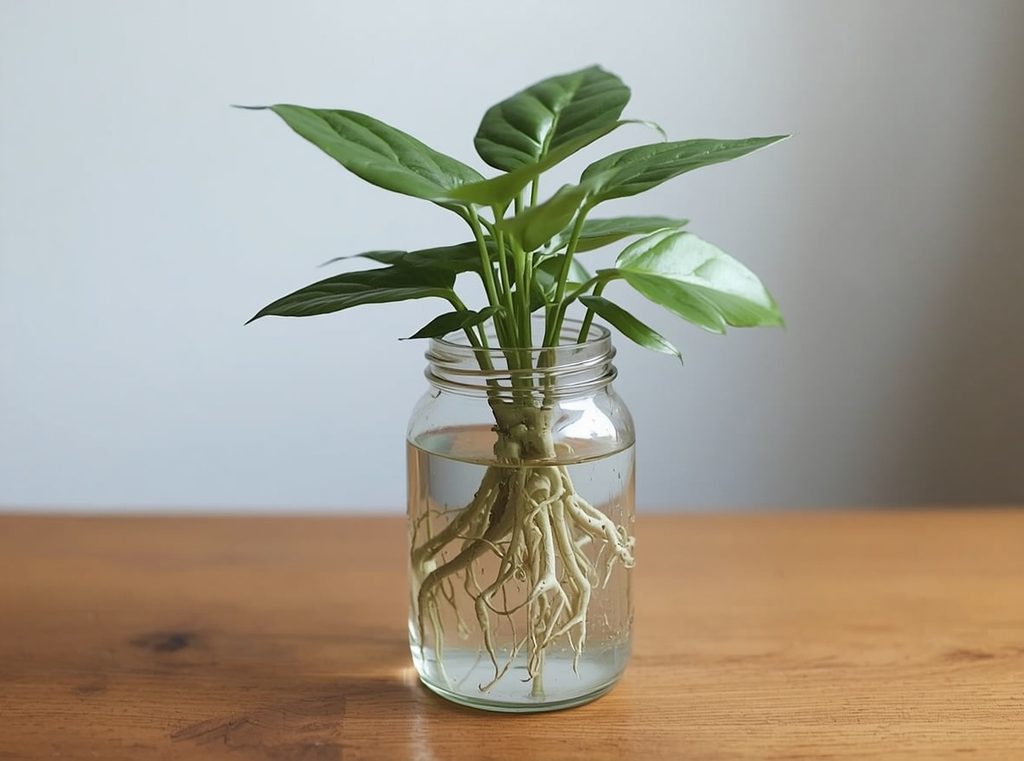
Monstera cuttings are a little larger and more dramatic than pothos cuttings, but the process is just as simple. The most important thing is making sure your cutting includes a node. A monstera leaf by itself may stay green in water for a long time, but without a node it cannot grow into a new plant.
Look for the swollen section of stem where a leaf or aerial root emerges and cut below it. Place that node in water while keeping as much of the leaf and stem above water as possible. Because monstera cuttings are heavier, a taller vase or jar usually works better than a small drinking glass.
Roots can take a few weeks to develop, but once they get going they are easy to see and surprisingly satisfying to watch.
4. Spider Plant
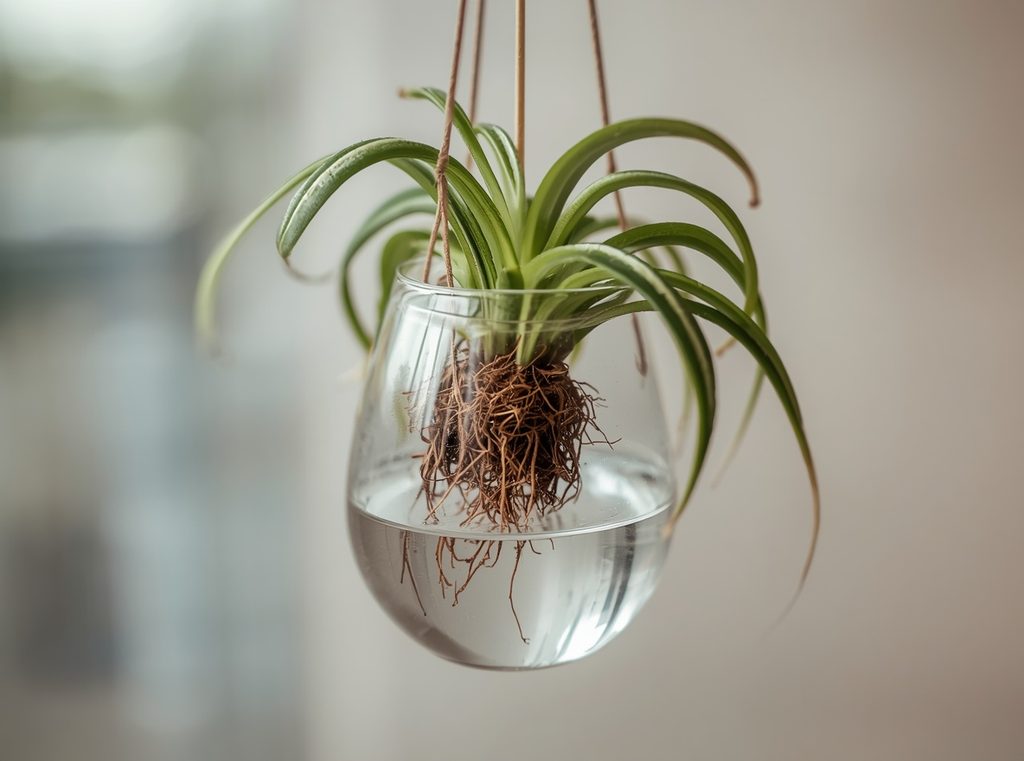
Spider plants practically do the propagation work for you. Mature plants produce long stems with little baby plants hanging from the ends, and those babies can be snipped off and rooted in water.
Choose a plantlet that already has a few leaves and, ideally, tiny root nubs at the base. Cut it away from the mother plant and sit the base in a shallow glass of water, keeping the leaves above the surface.
Because these babies are already partially formed plants, they often root quickly and transition into soil without much drama.
5. Tradescantia
If you want something that roots fast enough to make you feel instantly good at this, try tradescantia. These trailing plants can develop roots within days, and they are one of the easiest plants to propagate from stem cuttings.
Take a cutting with a few leaves and at least one node, remove the lowest leaves and place the bare section of stem in water. A few cuttings grouped together in the same jar will eventually give you enough new growth to make a fuller plant.
Tradescantia can become leggy over time, so regular propagation is actually a useful way to keep the original plant looking dense and healthy.
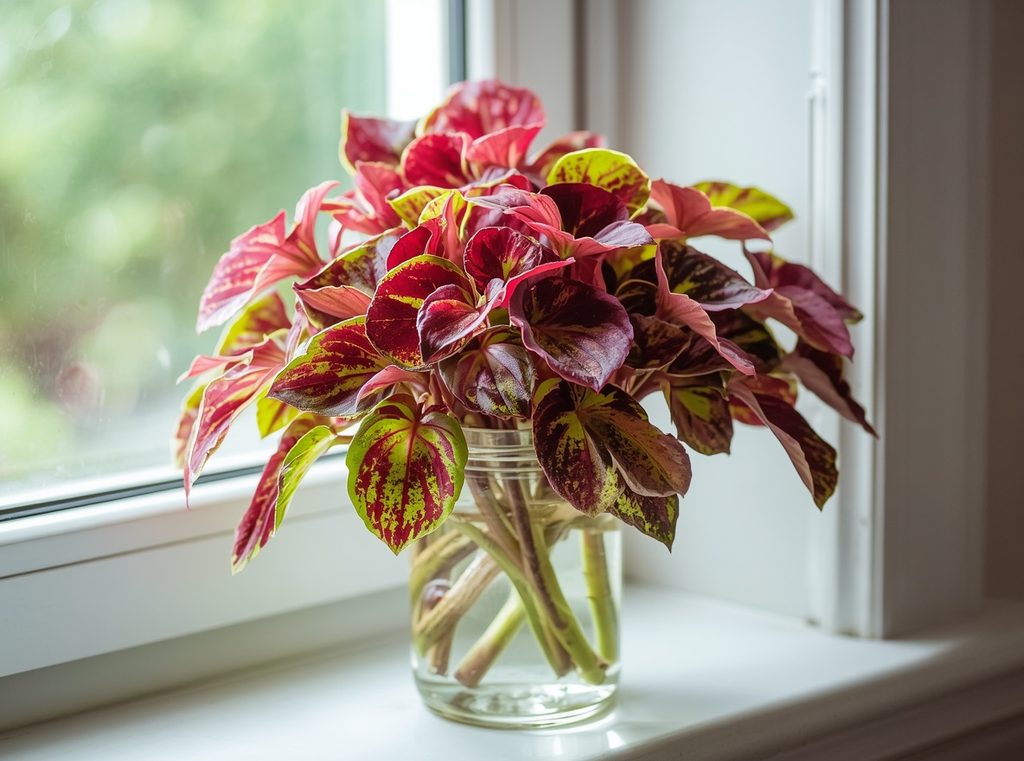
6. Coleus
Coleus is often grown outdoors, but it is incredibly easy to propagate in water and can be brought inside before cold weather arrives. It is a great option if you have a colour or variety you really love and want to keep going without buying another plant next year.
Cut a healthy stem just below a leaf node, remove the lower leaves and place the stem in water. Keep the jar somewhere bright but out of intense direct sun while the roots develop.
Coleus roots quickly, and once the roots are a few inches long you can pot it up and pinch the growing tips occasionally to encourage a bushier plant.
7. Mint
Mint is one of the easiest herbs to propagate, which probably will not surprise anyone who has ever planted it outside and watched it attempt to take over an entire garden.
Snip a healthy stem below a node, remove the leaves from the bottom few inches and place the cutting in water. Roots usually begin forming fairly quickly, and several cuttings can be rooted together in the same glass.
Once they have a good root system, transfer them into a pot with drainage. Keeping mint in a container is generally a good idea anyway, unless you are prepared to have mint become a permanent feature of your property.
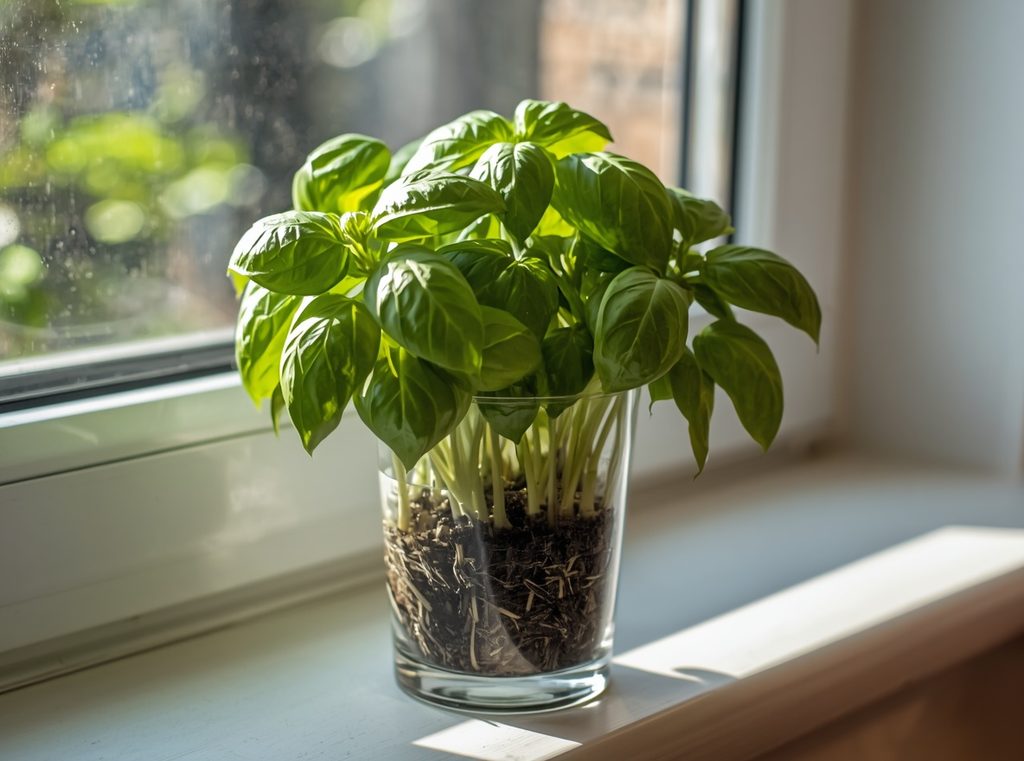
8. Basil
If you buy those little pots of basil from the grocery store, you can often turn one plant into several. Basil stems root surprisingly well in water and can give you a steady supply of fresh plants through the warmer months.
Take a cutting about four to six inches long, remove the leaves from the bottom half and place the stem in water. Keep it somewhere bright and change the water regularly.
Once roots develop, you can plant the cutting in soil and continue harvesting from it. Pinching off the top leaves regularly also encourages the plant to branch instead of growing into one tall stem.
9. Begonia
Many begonias can be propagated from stem cuttings in water, particularly cane and trailing varieties. They are slightly slower than something like pothos or tradescantia, but still very beginner friendly.
Choose a healthy stem with a few leaves, cut below a node and remove any leaves that would end up submerged. Place the cutting in water and keep it in bright, indirect light while the roots develop.
Begonia stems can be a little more prone to rot, so start with a clean jar and change the water if it becomes cloudy. Once you have a healthy cluster of roots, transfer the cutting into a light potting mix.
10. African Violet
African violets are a little different because you can grow a new plant from a single leaf rather than taking a piece of stem with several leaves.
Choose a healthy mature leaf and cut it off with about an inch or two of stem attached. Place just the stem in water while keeping the leaf itself dry. A narrow-necked bottle or small jar can help hold the leaf above the surface.
Roots will form first, followed eventually by tiny new leaves near the base. This one takes more patience than pothos, but it is still very simple and feels slightly magical when the first little plantlets appear.
How to propagate plants in water
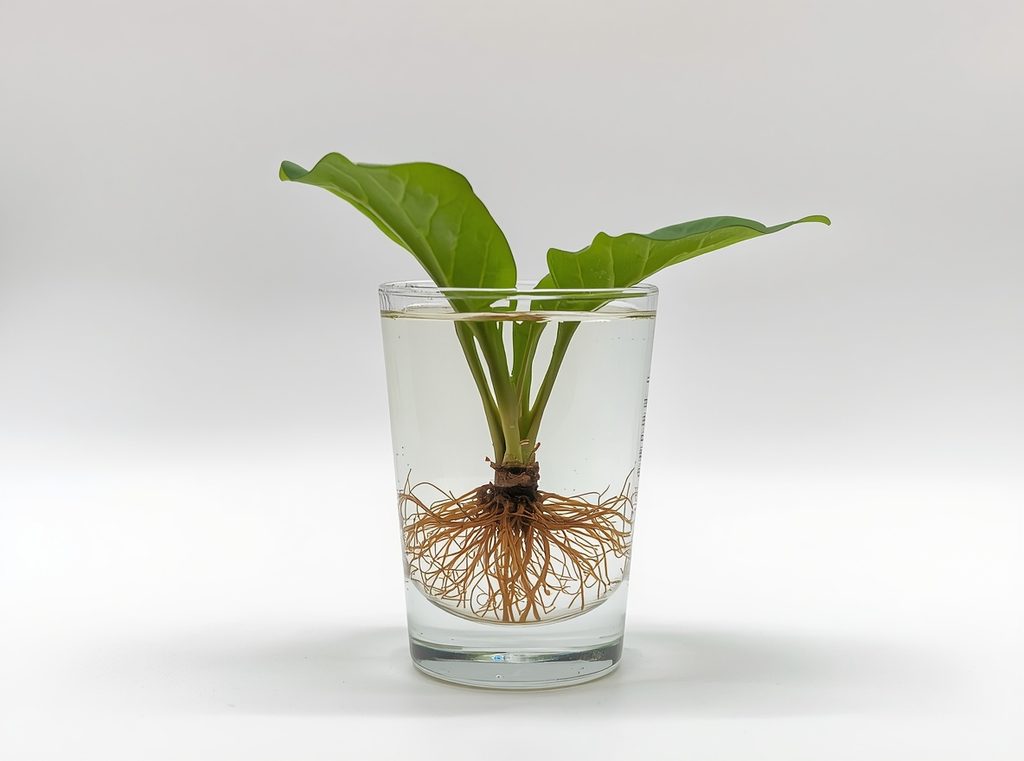
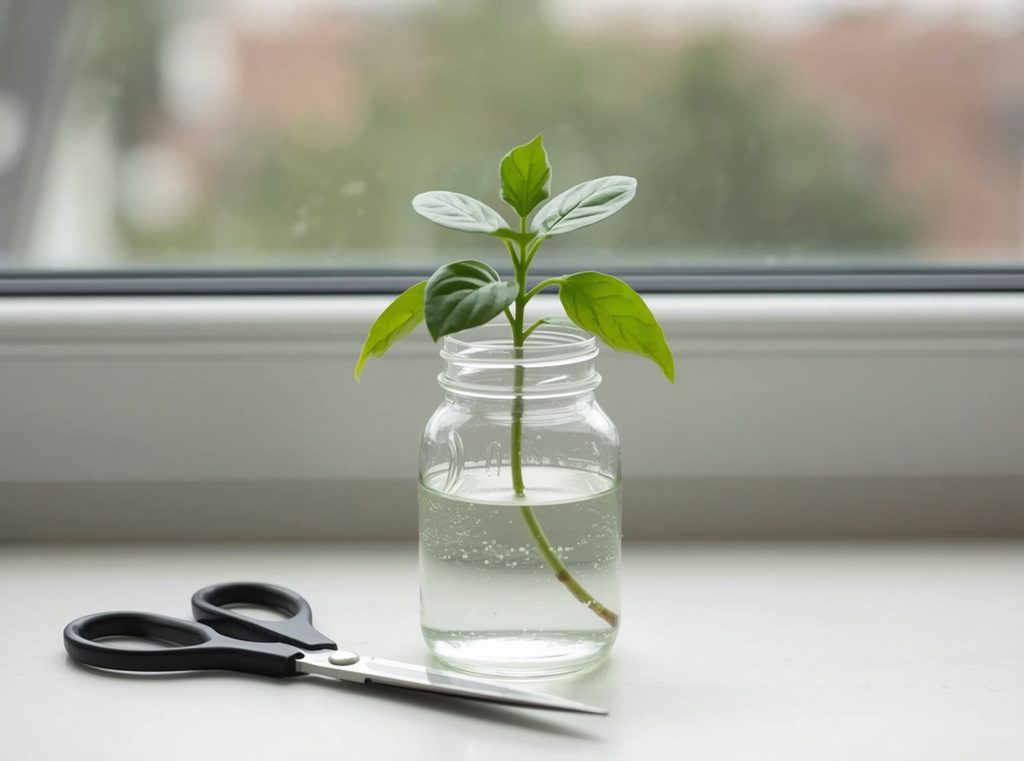
The basic process is almost the same for all of these plants. Start with a healthy cutting and use clean scissors or pruning shears. For stem cuttings, make sure you include at least one node because that is where new roots and growth usually develop.
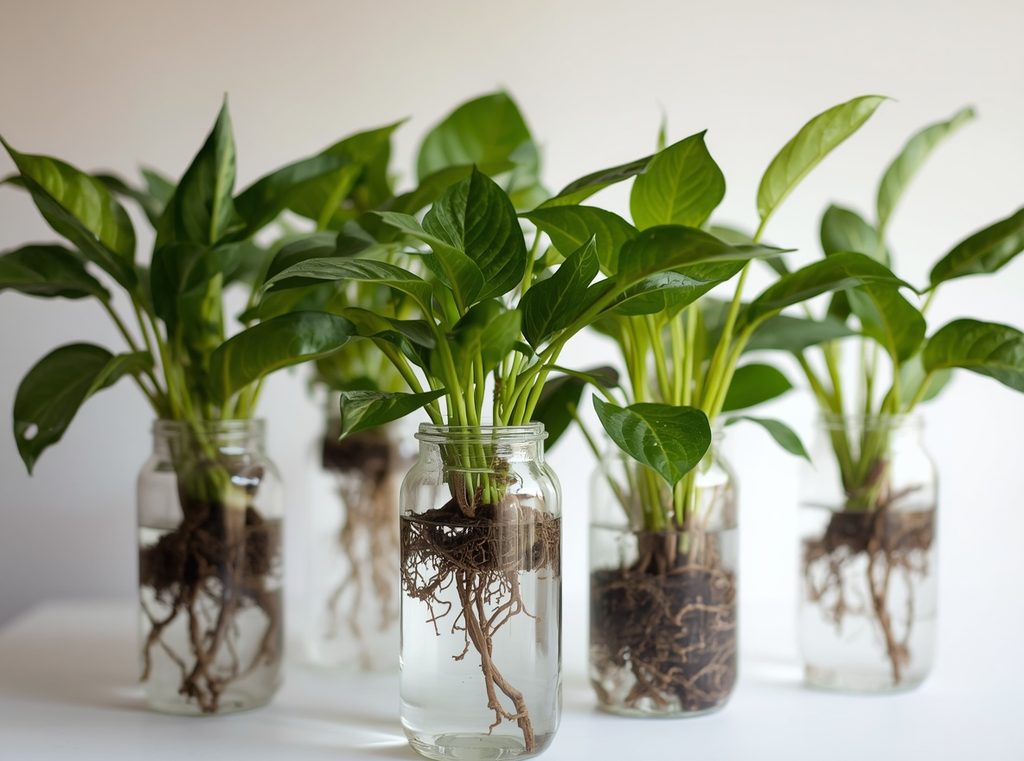
Remove any leaves that would sit below the waterline, then place the cutting in a clean glass or jar filled with room-temperature water. Put it somewhere with bright, indirect light and change the water every week or whenever it starts looking cloudy.
You do not need fertilizer while the cutting is first rooting. At this stage, your main job is basically just keeping the water fresh and resisting the urge to pull the cutting out every day to inspect it.
When should you move cuttings into soil?
There is no single perfect moment, but I usually wait until the roots are a few inches long and there are several of them rather than one tiny root sticking out of the stem.
Once you move the cutting into potting soil, water it thoroughly and keep the soil slightly more moist than usual for the first week or two. Roots that developed in water are used to constant moisture, so suddenly moving them into very dry soil can be a shock.
After the plant settles in and starts producing new growth, you can gradually switch to the normal watering schedule for that particular plant.
Can you keep propagated plants in water forever?
Some plants can live in water for a surprisingly long time, especially pothos and philodendron. You may even prefer the look of visible roots growing in glass containers.
But plain water does not provide the same nutrients as soil, so plants kept permanently in water eventually need some form of diluted hydroponic fertilizer. You will also want to clean the container occasionally and keep an eye out for algae or rotting roots.
If your goal is simply to make another regular houseplant, transferring it into soil once it has established roots is usually the easiest option.
A few propagation mistakes to avoid
The biggest mistake is taking a cutting without a node. This is especially common with monstera, where a beautiful single leaf can happily sit in water without ever becoming a new plant.
Another common problem is submerging too much of the cutting. You want the node or bare stem in the water, not a bunch of leaves. Leaves that sit underwater tend to rot and can make the whole jar unpleasant fairly quickly.
Finally, do not put fresh cuttings directly into strong afternoon sun. They need light, but intense sun through a window can heat the water and stress a cutting that does not have roots yet. Bright, indirect light is usually the safest place to start.
Start with the plant you already have
You definitely do not need to buy a special plant just to try propagation. Look around at what is already growing in your house, your garden or even a friend’s windowsill.
If you have pothos, philodendron, spider plant, tradescantia or one of the other plants on this list, take one small cutting and put it in water. That is really all there is to it.
And once the first little white root appears, there is a very good chance you will start looking around your house wondering what else you can cut up and put in a jar.